
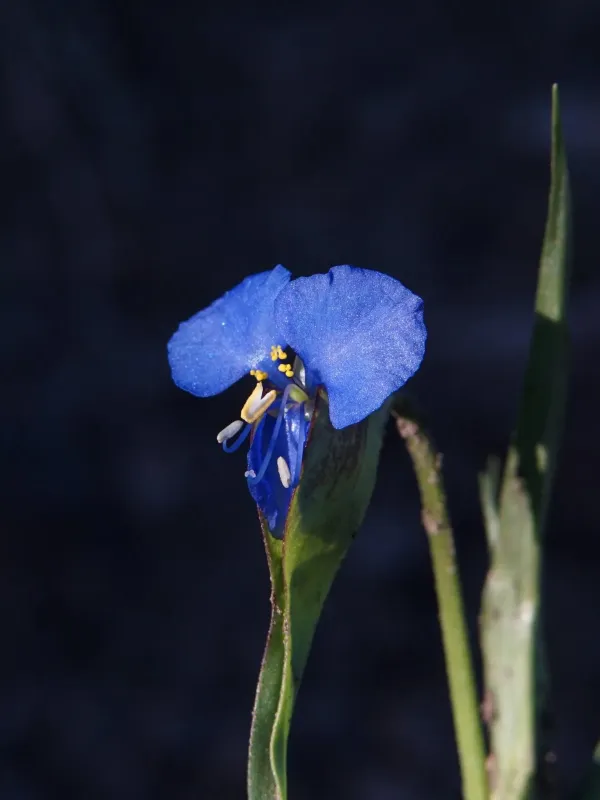
Commelina dianthifolia
Commelina dianthifolia
Description
Sowing dates
Commelina dianthifolia is a perennial plant belonging to the Commelinaceae family, native to regions with moderate climates.
Propagation is typically carried out by sowing seeds in early spring or by dividing the rhizomes once the plant has reached maturity.
For seed sowing, use a well-draining seed-starting mix, keeping it consistently moist until germination occurs in approximately two to three weeks.
Transplanting into the garden should be delayed until the danger of frost has passed to ensure the stability of the root system.
Proper spacing is essential, allowing approximately 10 to 12 inches between plants to facilitate growth and prevent competition for resources.
Growing requirements
This species thrives in locations that receive full sun to partial shade, depending on the intensity of the regional summer heat.
The soil should be fertile, light, and enriched with organic matter, maintaining a slightly acidic to neutral pH level for optimal growth.
Consistent irrigation is vital, as the plant prefers soil that is kept moist but not saturated, avoiding prolonged periods of drought.
In colder regions, it is recommended to provide a layer of mulch during the winter to protect the underground rhizomes from freezing.
Fertilization with balanced nutrients during the active growing season will support robust foliage and the production of attractive flowers.
Main diseases and pests
Common plant diseases include root rot, which typically develops in heavy or waterlogged soils lacking sufficient drainage capacity.
Pests such as slugs and snails are particularly problematic, often targeting the soft foliage and causing significant aesthetic damage.
Aphids can also occasionally infest the plant, necessitating periodic inspections and potential use of horticultural soaps for control.
Sanitation practices, such as removing dead plant material at the end of the season, help to reduce the survival of pathogens.
Implementing a proper drainage system and ensuring adequate airflow are the primary cultural methods to prevent most fungal infections.