
Hybrid forest cactus
Disocactus ackermannii (Haw.) Ralf Bauer x Disocactus anguliger (Lem.) M. Á. Cruz & S. Arias
Description
Growing requirements
This hybrid, derived from the cross-breeding of Disocactus ackermannii and Disocactus anguliger, belongs to the Cactaceae family. Unlike desert species, this culture is an epiphyte native to the tropical forests of Central and South America.
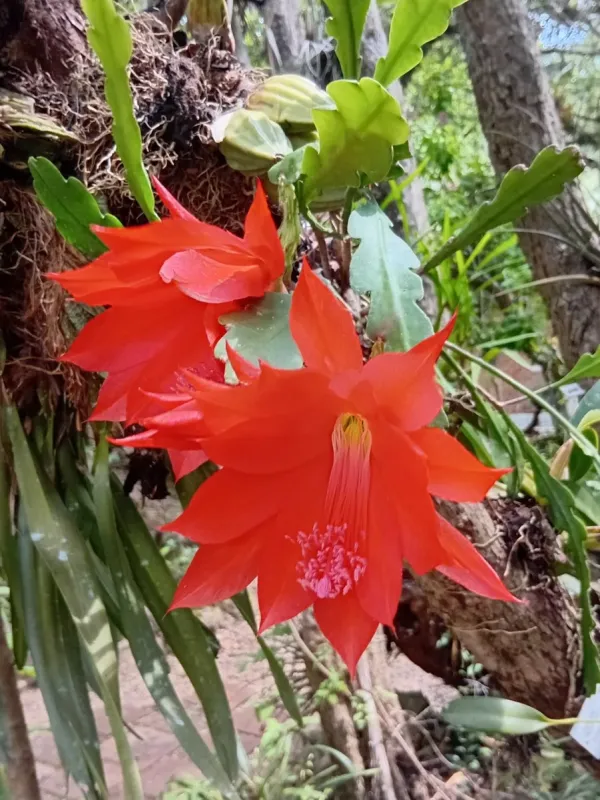
The plant exhibits unique morphology: its stems combine traits of both parents, often displaying the zigzag shape characteristic of Disocactus anguliger and the vibrant, large red flowers typical of Disocactus ackermannii.
For successful growth, the plant requires diffused light and high humidity, mimicking the conditions of the tropical forest understory. Direct sunlight can scorch the delicate stems, so placement on east or west-facing windows is recommended.
The potting medium must be loose, airy, and slightly acidic. An ideal substrate consists of a mix of leaf mold, peat, charcoal, and conifer bark pieces to ensure excellent drainage.
The optimal temperature range during the growing season is 20–25 degrees Celsius. During the winter period, a short-term drop in temperature to 15 degrees is necessary to stimulate flower bud formation.
Main diseases and pests
The main pests threatening this culture in indoor environments are mealybugs and spider mites. Regular inspection of the stem joints helps to detect pests at an early stage.
Fungal diseases, such as root rot, frequently occur due to waterlogged substrate and standing water in the tray. It is essential to practice moderate watering, allowing the top layer of the soil to dry out between sessions.
Improper lighting conditions can lead to stem elongation (etiolation), which makes the plant aesthetically unappealing and weakens its resistance to infections.
To prevent pest infestation, periodic misting with soft water and the application of systemic insecticides upon the first sign of insect activity are recommended.
Selecting the correct soil composition minimizes the risks of rot in the root system, which is crucial for the longevity of this forest cactus.