
Tillandsia tricolor
Tillandsia tricolor
Description
Growing requirements
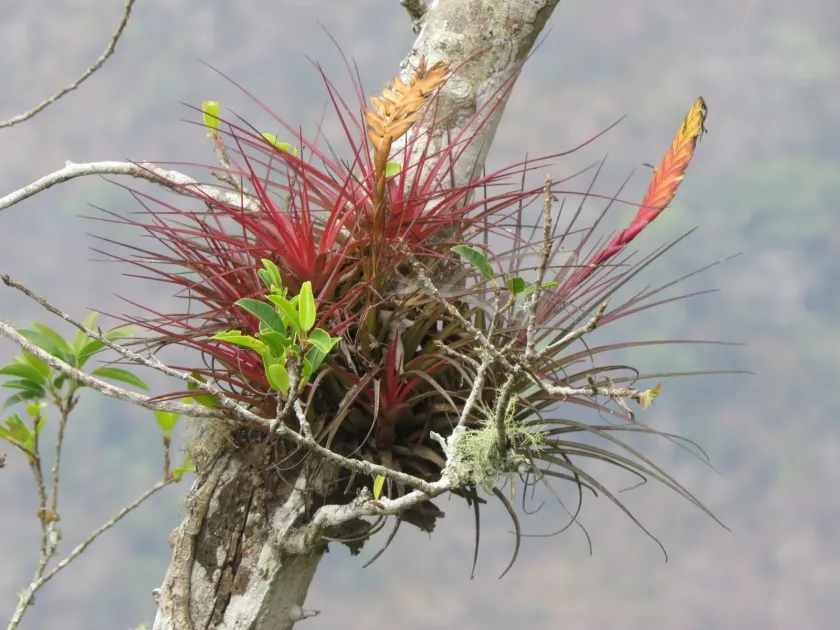
Tillandsia tricolor is an epiphytic herb belonging to the Bromeliad family, native to tropical regions of Mexico and Central America. In its natural habitat, it is found growing on tree branches and rock cliffs, where it absorbs moisture and nutrients directly through its leaves.
The plant is characterized by a compact, radial growth pattern of stiff leaves that change color during the blooming phase, featuring distinct shades of red, yellow, and green. This specific color transition makes it a highly prized specimen for ornamental collections.
Successful cultivation requires a high-humidity environment and consistent indirect light. Unlike traditional field crops, this plant thrives without soil, relying on moisture from the ambient air and specialized foliar feeding techniques to maintain its growth cycles.
Agrotechnical management involves regular misting with mineral-free water to prevent salt buildup on the trichomes. Proper air circulation is critical, as stagnant air can lead to moisture accumulation in the core of the rosette, resulting in structural damage.
The primary use of Tillandsia tricolor is in horticulture and interior landscaping. It is frequently featured in terrariums, hanging displays, and botanical installations, serving as a signature plant for enthusiasts who focus on exotic tropical foliage.
Main diseases and pests
Common pests affecting this species include mealybugs and spider mites, which thrive in dry conditions. Keeping the plant properly hydrated and occasionally cleaning the foliage helps to prevent these infestations from establishing a stronghold on the leaves.
Disease management focuses heavily on preventing rot. Since the plant is sensitive to waterlogged conditions, maintaining an appropriate drying time between waterings is essential to avoid fungal infections and root decay within the central leaf structure.