
Tillandsia tricholepis
Tillandsia tricholepis
Description
Growing requirements
Tillandsia tricholepis is a captivating epiphytic species belonging to the Bromeliaceae family. Native to the diverse ecosystems of South America, including Brazil, Argentina, and Bolivia, it naturally thrives in high-canopy environments where it grows on branches, extracting moisture and nutrients from the atmosphere.
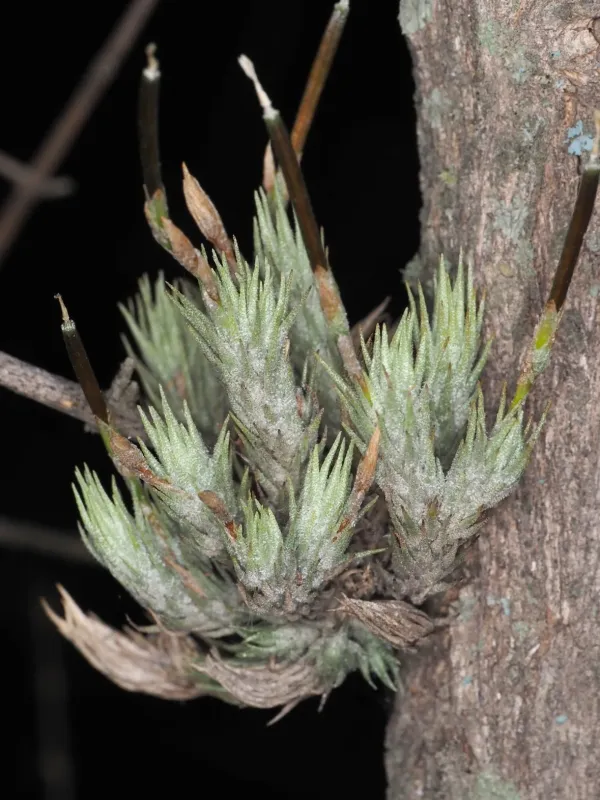
This species is defined by its compact, tufted habit and its remarkable covering of silvery trichomes. These specialized scales serve as the primary organs for water absorption and gas exchange, effectively allowing the plant to exist without any traditional soil-based root system.
The cultivation requirements focus heavily on simulating its natural habitat. High relative humidity (60% to 80%) is essential for health. Unlike terrestrial plants, this species must be misted frequently or soaked in water periodically to ensure the foliage remains hydrated and functional.
Regarding light, Tillandsia tricholepis requires bright, indirect light to maintain its compact growth form. Too little light will cause the plant to etiolate and lose its silvery appearance, while direct, harsh sun can scorch the foliage and cause dehydration of the delicate leaf structures.
Temperature management is crucial; the plant performs best in a range between 18°C and 26°C. While it can withstand slight fluctuations, it is sensitive to cold drafts and rapid temperature drops. Ensuring consistent airflow around the plant is vital after watering to prevent water accumulation in the center of the tufts.
Main diseases and pests
The most common issues for this plant are related to poor cultural practices, specifically stagnant water leading to crown rot. Regarding pests, scale insects and mealybugs are the primary threats, often found tucked deep within the foliage clusters, requiring vigilant monitoring and appropriate treatment.