
Tillandsia toropiensis
Tillandsia toropiensis
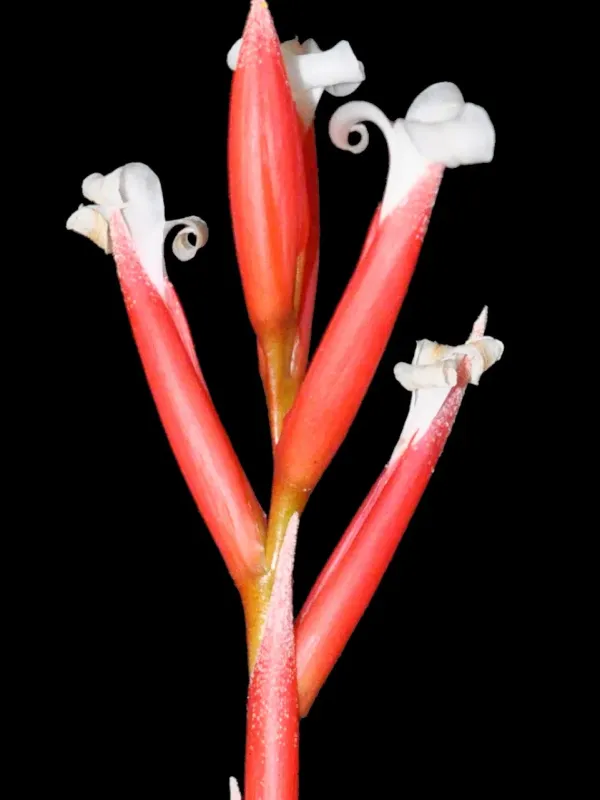
Description
Growing requirements
Tillandsia toropiensis is a specialized species within the Bromeliad family (Bromeliaceae). As an obligate epiphyte, it does not rely on soil for nutrient intake, instead utilizing its aerial roots primarily as anchors to secure itself to tree branches and rocky outcrops in its native South American habitats.
The plant is native to specific regions in Brazil, where it thrives in humid environments. Its leaves are densely covered with specialized structures called trichomes. These organs are essential for its survival, allowing the plant to absorb moisture, dust, and nutrients directly from the atmosphere.
For successful cultivation, Tillandsia toropiensis requires a balance of bright, indirect light. Excessive heat or prolonged exposure to direct midday sun can dehydrate the plant rapidly, leading to the browning of leaf tips and inhibited vegetative growth cycles.
The agricultural approach for this species centers on a strict misting schedule. Irrigation should be performed using soft, mineral-low water. After watering, the plant must be placed in an area with good airflow to ensure that all water evaporates from the leaf axils within a few hours.
Cultivation substrates should be limited to inert materials such as untreated cork bark, driftwood, or specialized mounting mesh. The plant should be attached securely using non-corrosive wire or water-resistant adhesive to simulate its natural growing environment on host vegetation.
Main diseases and pests
The most significant threat to Tillandsia toropiensis is rot, typically induced by poor ventilation and water accumulation. When the central rosette remains damp for extended periods, it creates an ideal environment for fungi and bacteria, which can cause the plant to disintegrate rapidly.
Pest management is focused on common greenhouse insects, including mealybugs and scale insects. These pests often hide at the base of the leaves, making them difficult to detect. Regular inspection and the application of mild, plant-safe soaps are recommended to prevent infestations.