
Tillandsia tenuifolia
Tillandsia tenuifolia
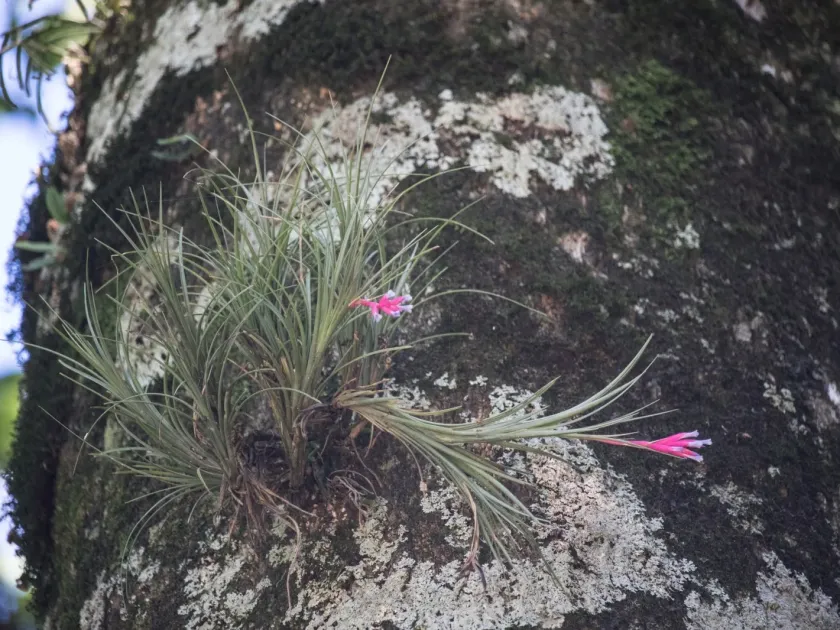
Description
Growing requirements
Tillandsia tenuifolia is a perennial epiphytic plant belonging to the Bromeliaceae family. Native to the tropical regions of Central and South America, it grows primarily on tree branches, thriving in humid forest environments.
Unlike conventional crops, this plant does not root in soil. It is an air plant that utilizes specialized structures on its leaves, known as trichomes, to absorb moisture and nutrients directly from the air and rain.
Optimal growth requires high atmospheric humidity and a consistent temperature range, typically between 18°C and 26°C. Proper ventilation is essential to mimic the natural airflow of its native habitat.
For horticultural purposes, plants are mounted on wood plaques, bark, or other porous materials. The mounting process involves securing the base with soft, rust-proof wire or durable string to allow for stable growth.
Light requirements are focused on bright but indirect exposure. Intense, direct sunlight can cause dehydration and tissue burn, so greenhouses often utilize shading cloth to ensure healthy photosynthesis.
Main diseases and pests
The primary threat to Tillandsia tenuifolia in cultivation is fungal decay caused by excessive moisture trapped within the central rosette. Adequate air circulation after watering is mandatory for health.
Mealybugs are the most common pest found in commercial and residential collections. They settle deep between the leaves, requiring persistent monitoring and precise application of organic pesticides or insecticidal soaps.
Scale insects present a significant challenge by piercing leaf tissues and extracting plant sap. Their presence often leads to stunted growth and weakened plants, necessitating immediate intervention.
Spider mites may manifest if the humidity levels drop below the threshold for an extended duration. Regular misting and maintaining optimal environmental parameters serve as the best natural defense.
Hard water is a common cause of nutritional stress and physical damage. High mineral content clogs the leaf trichomes, effectively choking the plant, so using rainwater or demineralized water is considered best practice.