
Tillandsia tenebra
Tillandsia tenebra
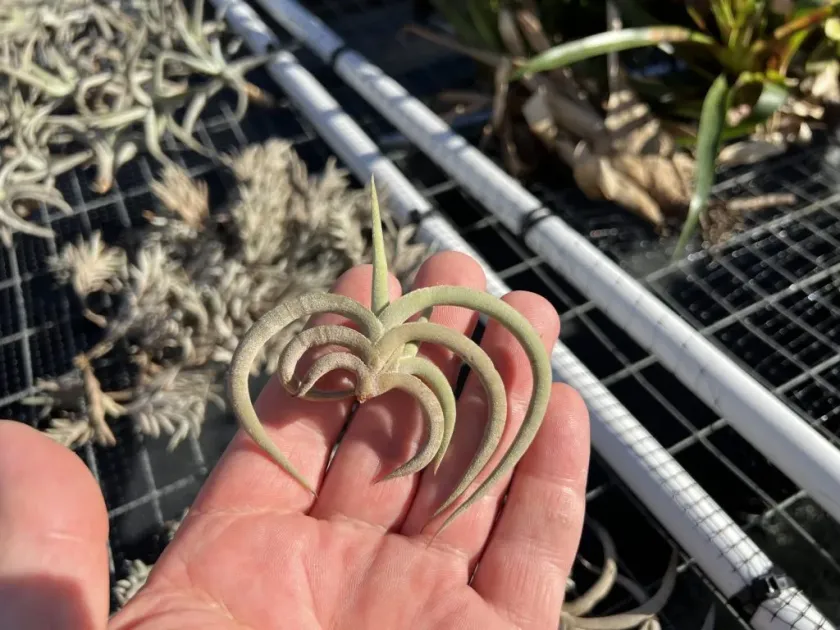
Description
Growing requirements
Tillandsia tenebra is a distinct member of the Bromeliaceae family, widely recognized for its epiphytic lifestyle. Originating from the tropical forests of the Americas, this species has evolved to thrive without soil, clinging to tree branches and rocky outcrops. It utilizes highly specialized leaf trichomes to absorb moisture and atmospheric nutrients directly from the surrounding air.
Optimal growth requires a consistent environment with high relative humidity, ideally maintained between 60% and 80%. Temperature levels should remain stable, typically between 20°C and 25°C, as the plant is susceptible to thermal stress. Bright, indirect light is essential to sustain the plant's metabolic processes and prevent etiolation.
Agrotechnical management focuses on regular misting with soft or distilled water. Mineral supplementation is performed via foliar feeding, using specialized liquid fertilizers formulated for air plants at a diluted concentration. Proper care must be taken to ensure that water does not pool in the central rosette, as this can trigger rot in sensitive tissue.
In terms of хозяйственное использование, Tillandsia tenebra is valued in the horticultural industry as a decorative component for vertical gardens, terrariums, and modern interior design. Its ability to grow in soil-less environments makes it a highly desirable choice for contemporary green architecture and botanical displays.
Sufficient ventilation is critical to the longevity of the plant. A gentle, constant airflow helps maintain the necessary balance between moisture absorption and transpiration, while also preventing the accumulation of pathogens in the microenvironment surrounding the plant's foliage.
Main diseases and pests
Mealybugs and spider mites are the primary pests that affect this species, particularly in environments with inadequate humidity. Regular inspection of the leaf axils is necessary for early detection and mitigation to prevent significant infestations that could weaken the plant structure.
Fungal infections, often manifested as base rot, are the most frequent health threats associated with poor horticultural practices. Overwatering or lack of proper drying time for the rosette can lead to rapid tissue degradation. Maintaining a balance between hydration and air circulation is the best preventative strategy.