
Tillandsia tectorum
Tillandsia tectorum
Description
Growing requirements
Tillandsia tectorum is a distinctive member of the Bromeliaceae family. Originating from the high-altitude, arid slopes of the Peruvian and Ecuadorian Andes, this species has evolved to thrive in environments where ground-level water is virtually absent, relying instead on atmospheric moisture.
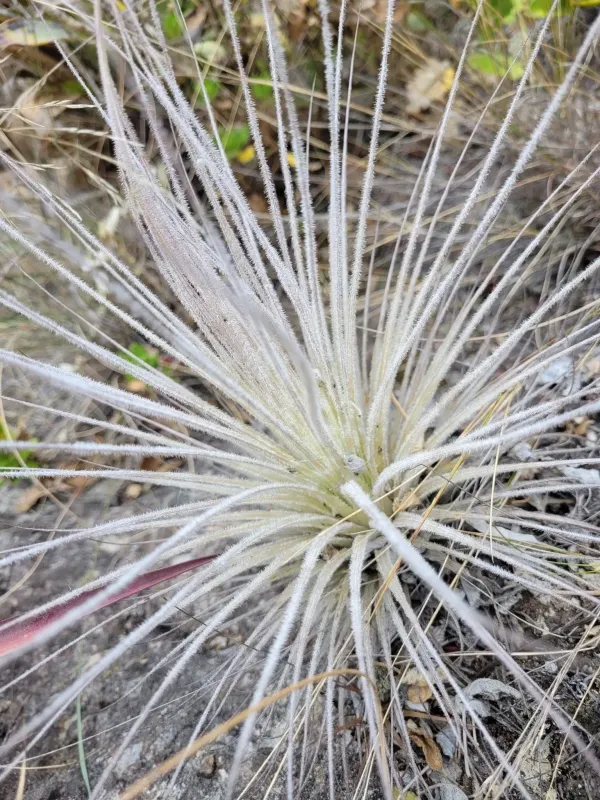
The botanical highlight of this plant is its dense, snow-white coat of trichomes. These long, hair-like structures are vital for the plant's survival, functioning to reflect harsh sunlight, capture fog, and minimize water evaporation from the internal leaf tissues.
In cultivation, this species is treated as a true air plant. It must never be planted in soil, as its roots serve only for mechanical attachment to rocks or wood. Providing excellent air circulation is the most critical factor in its management to prevent the accumulation of stagnant water within the foliage.
The environmental requirements include high, bright light levels. While they can tolerate some direct sun in moderate climates, in most indoor settings, they require filtered, bright light to maintain their signature silvery, fuzzy appearance and to promote healthy growth patterns.
Watering practices differ significantly from other bromeliads. T. tectorum requires very infrequent watering, ideally through misting. It is essential that the plant dries completely within a few hours to mimic its natural mountain habitat, where winds quickly disperse morning mists and dew.
Main diseases and pests
The primary threats to this species are fungal pathogens triggered by poor air circulation. Over-watering is the leading cause of plant mortality, as excess moisture trapped in the dense trichome layer leads to rapid crown rot and tissue decay that is often difficult to reverse.
Regarding pests, mealybugs and scale insects represent the most frequent challenges. Because of the plant's delicate covering, physical removal or gentle, diluted insecticidal soaps are recommended, as harsh chemicals can permanently damage the plant's unique appearance and structural integrity.