
Tillandsia streptophylla
Tillandsia streptophylla
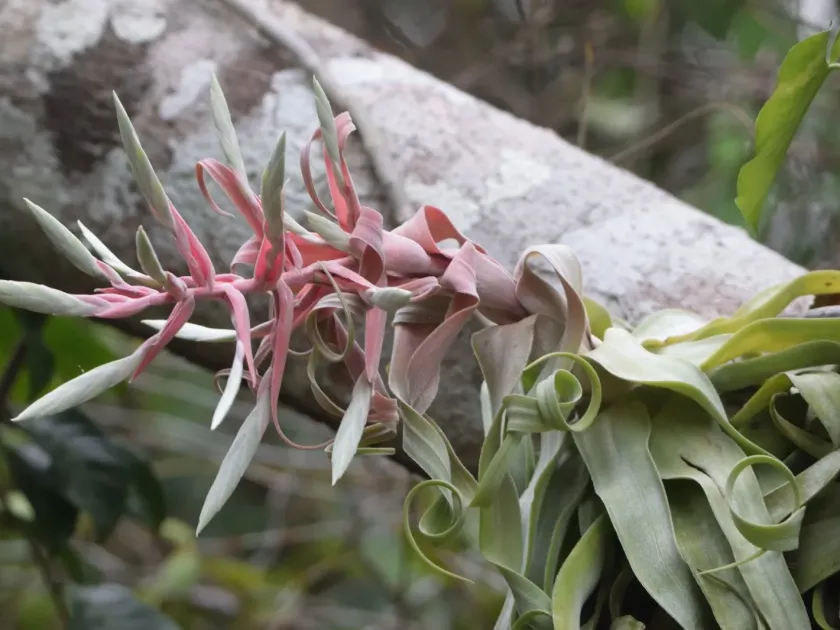
Description
Growing requirements
Tillandsia streptophylla belongs to the Bromeliaceae family and is recognized as a distinctive epiphytic species. It originates from the tropical forests of Mexico, Central America, and the Caribbean, where it grows attached to trees.
The plant is botanically renowned for its unique adaptive strategy: its leaves curl into tight spirals when humidity is low. This morphological change allows the plant to conserve moisture in its arid, high-canopy natural environment.
Cultivation requires bright, indirect sunlight to maintain its structural integrity and health. In interior spaces, placement near a window with filtered light is ideal to prevent leaf scorching while ensuring enough energy for development.
As an air plant, it does not require soil. It must be mounted on driftwood, bark, or kept in open containers with excellent airflow. Watering is best achieved through misting or occasional submersions in soft, chlorine-free water.
Proper air circulation is crucial for the survival of this culture. After watering, the plant should be shaken to remove excess moisture from the center of the rosette to prevent internal rot and maintain the health of the base.
Main diseases and pests
Common pests affecting Tillandsia streptophylla include scale insects and mealybugs. These pests hide within the curled leaves, making them difficult to detect and eradicate without thorough inspection.
The primary physiological threat is fungal rot caused by improper moisture management. If the plant remains too damp for extended periods, the base of the leaves will soften and decay, often leading to the rapid loss of the entire specimen.