
Tillandsia streptocarpa
Tillandsia streptocarpa
Description
Growing requirements
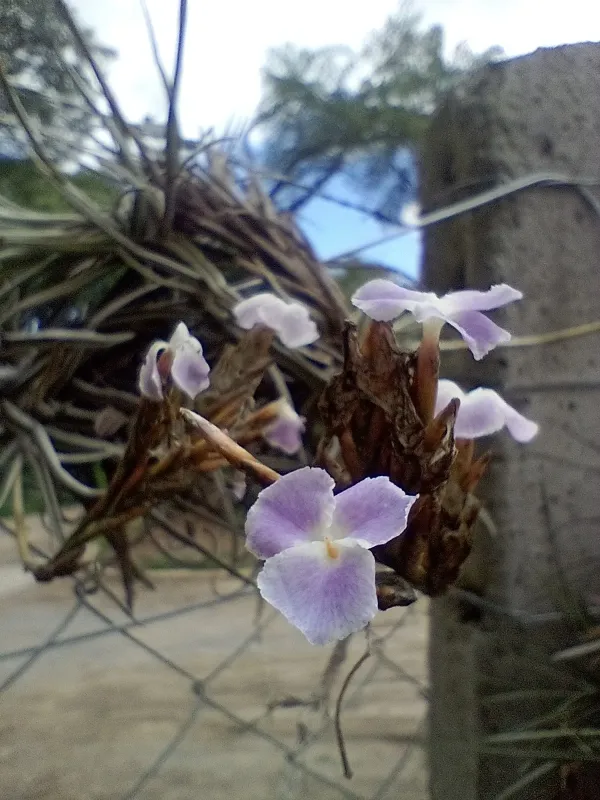
Tillandsia streptocarpa is a perennial epiphytic plant belonging to the Bromeliaceae family. Renowned for its unique morphology, it typically grows attached to tree branches or rocky substrates in its native South American habitats, including Bolivia and Brazil.
This species is highly adapted to arid environments, possessing a thick layer of trichomes—specialized scales that capture moisture and nutrients directly from the atmosphere. It does not require soil to thrive, relying instead on its specialized aerial root system.
In terms of cultivation, the plant requires bright, filtered light to maintain its structural integrity and encourage blooming. It thrives best in well-ventilated spaces where temperatures stay within the range of 18 to 25 degrees Celsius throughout the growing season.
The core of its maintenance involves a consistent misting schedule or periodic soaking. During the warm months, high humidity levels are essential, while during cooler periods, it is recommended to reduce moisture to prevent physiological stress.
As a decorative plant, it is widely favored in contemporary landscaping for terrariums and vertical displays. Its ability to grow without a pot makes it an extremely versatile choice for designers creating minimalist or botanical-style interior decorations.
Main diseases and pests
The most common pests affecting this species are scale insects and mealybugs. These pests tend to congregate in the dense leaf axils, where they feed on sap, potentially causing yellowing and stunted growth if left unmanaged.
The primary threat to the health of Tillandsia streptocarpa is rot caused by excessive moisture trapped in the center of the rosette. Proper airflow is critical to prevent pathogen development, especially in enclosed environments or during the winter months.