
Tillandsia straminea
Tillandsia straminea
Description
Growing requirements
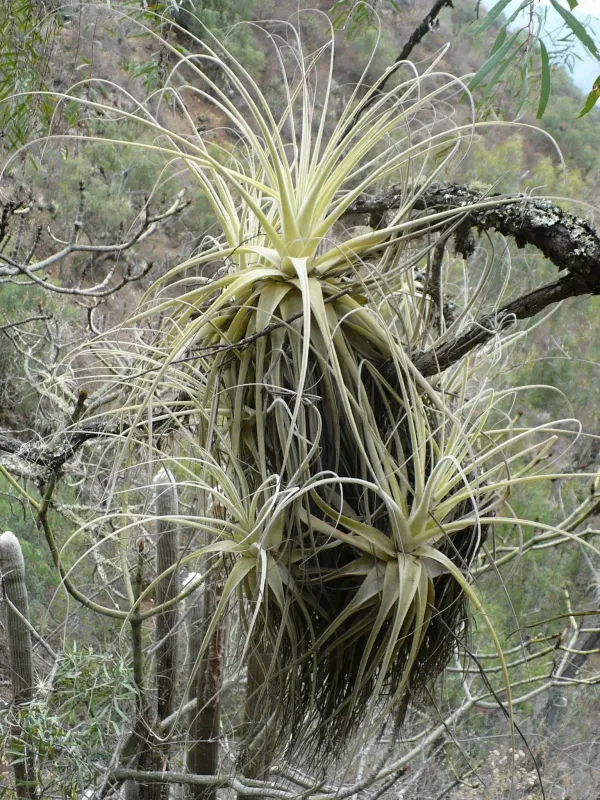
Tillandsia straminea is a perennial herbaceous plant belonging to the Bromeliaceae family. As an atmospheric epiphyte, this species lacks a traditional root system for soil nutrient uptake and instead relies on specialized leaf structures called trichomes.
Native to the arid regions of South America, specifically Peru, this plant thrives in high-altitude environments. It has evolved to survive by absorbing moisture and atmospheric nutrients directly through its silvery, scale-covered foliage, which reflects excessive sunlight.
The botanical structure is characterized by a rosetted growth habit with long, curved leaves. These leaves act as natural sponges, efficiently capturing dew and fog in its native habitat, which is essential for surviving extended dry periods in the desert climate.
Successful cultivation requires bright, indirect light and excellent air circulation. The plant is sensitive to stagnant air, which can promote fungal growth, so placement in well-ventilated areas is mandatory for healthy development and consistent growth patterns.
Agricultural practice for Tillandsia straminea centers on hydration management. Instead of soil cultivation, the plant should be misted or soaked periodically. After hydration, it must be allowed to dry completely within a few hours to prevent internal rot and tissue decay.
Main diseases and pests
The most common disease affecting this species is crown rot, triggered by water accumulation in the center of the leaf rosette. Maintaining proper angles during drying is essential to prevent moisture retention that leads to irreversible plant tissue damage.
Pest management focuses on controlling mealybugs and spider mites, which can thrive in low-humidity indoor environments. Regular inspections are recommended, and if an infestation is detected, treatment with specialized horticultural oils or insecticidal soap should be performed.
Harvesting
The primary economic use of Tillandsia straminea is within the ornamental horticulture and plant retail sector. It is highly valued for its aesthetic appeal, architectural shape, and fragrant, showy inflorescences, making it a popular choice for high-end interior design and living installations.