
Tillandsia sphaerocephala
Tillandsia sphaerocephala
Description
Growing requirements
Tillandsia sphaerocephala belongs to the Bromeliaceae family. This distinct epiphytic species originates from the mountainous regions of South America, specifically Bolivia, where it thrives in high-altitude environments often on rocky outcrops.
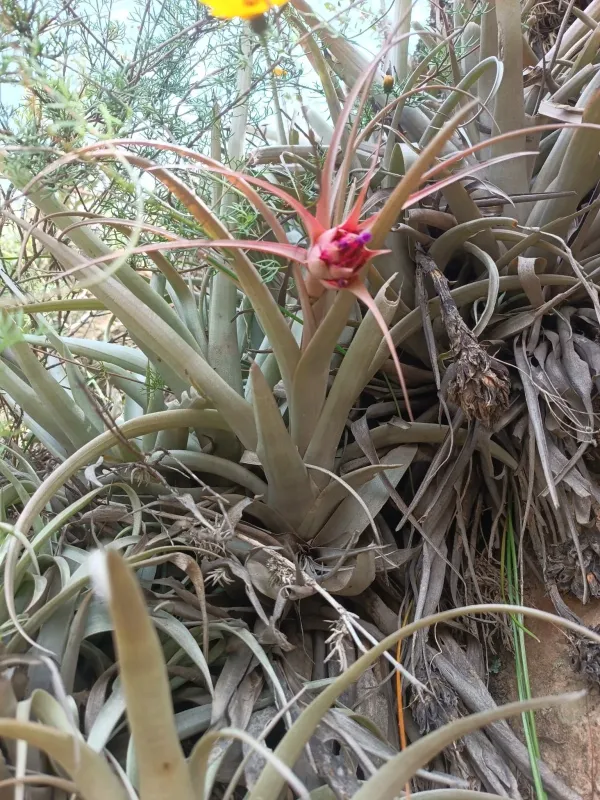
The plant is defined by its compact rosette of stiff leaves, which are densely covered in trichomes or silvery scales. These structures are vital for the plant, enabling it to absorb moisture and nutrients directly from fog and atmospheric humidity.
Cultivation requires specific environmental conditions, emphasizing high ambient humidity and constant airflow. The species prefers bright, indirect light, mimicking the filtered sunlight found in its natural high-altitude habitat to maintain plant vigor.
Agronomic management involves mounting the plants on organic substrates such as cork bark or driftwood. Irrigation is best managed through regular misting with soft water, as the roots primarily serve as an anchoring mechanism rather than for uptake.
The primary utility of this plant is ornamental, highly valued by collectors and interior designers. It is frequently incorporated into terrariums, air plant displays, and indoor green walls due to its unique architectural aesthetic and resilience.
Main diseases and pests
Common pests affecting this species include scale insects and mealybugs. These pests hide in the tight leaf rosettes, extracting sap and weakening the plant, which often leads to poor development and unsightly damage.
Fungal infections are the most frequent health issue, typically triggered by stagnant water and poor ventilation. Excessive moisture trapped between leaves promotes rot, which can quickly compromise the structural integrity of the plant.