
Tillandsia setacea
Tillandsia setacea
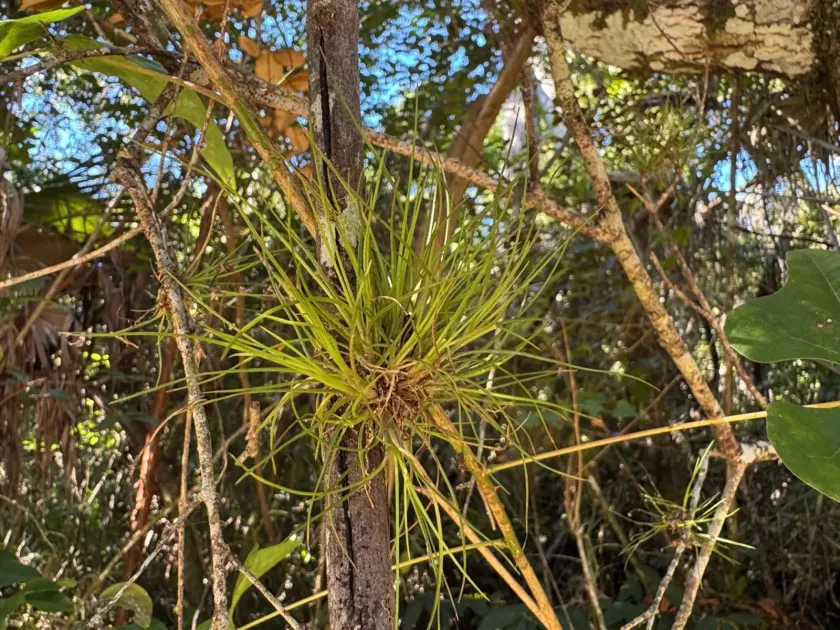
Description
Growing requirements
Tillandsia setacea is a fascinating perennial epiphyte belonging to the Bromeliad (Bromeliaceae) family. Native to the tropical regions of the Americas, including the southeastern United States, Mexico, and the Caribbean, it thrives in environments characterized by high atmospheric humidity.
The plant is defined by its grass-like, narrow foliage that forms a dense, cascading rosette. As an epiphyte, it does not require soil to grow, instead using its root system exclusively as an anchor to attach itself to tree branches or rocky substrates in its natural habitat.
Light requirements for this species are specific; it prefers bright, filtered light. Direct sunlight is generally harmful and can scorch the foliage, while insufficient lighting leads to weak growth and the failure of the plant to produce its characteristic flower spikes.
Temperature management is crucial for the health of Tillandsia setacea. Ideally, the environment should be maintained between 20°C and 25°C. The plant is highly sensitive to frost and sudden temperature drops, which can lead to permanent cellular damage.
Proper water intake is managed through foliar absorption. The entire surface of the plant is covered in specialized scales called trichomes, which capture moisture and nutrients from the air. Regular misting with soft, room-temperature water is essential for successful cultivation.
Main diseases and pests
The most significant threat to Tillandsia setacea is rot, usually resulting from standing water trapped within the central rosette. To prevent this, good air circulation is mandatory, ensuring that the plant dries out completely within a few hours after each watering.
Pest infestation is another common challenge, with mealybugs and spider mites being the primary culprits. These pests tend to colonize the base of the leaves, drawing sap and weakening the plant structure over time, which can eventually prove fatal.
In terms of management, preventative measures are far superior to remedial treatments. Regularly cleaning the plant with a gentle stream of water helps dislodge pests and keeps the trichomes clean, allowing for efficient respiration and nutrient absorption.
Nutrient deficiency is often observed in stagnant growth or pale foliage. While air plants are slow growers, a monthly application of a highly diluted, urea-free fertilizer specifically formulated for bromeliads can enhance flowering and overall vigor.
Finally, environmental stress caused by low humidity below 50% can lead to leaf tip dieback. Maintaining a stable microclimate is the most effective way to avoid these physiological disorders and ensure the plant reaches its full ornamental potential.