
Tillandsia seleriana
Tillandsia seleriana
Description
Growing requirements
Tillandsia seleriana is a fascinating species of air plant belonging to the Bromeliaceae family. It is native to the tropical forests of Central America, predominantly found in Guatemala, Mexico, and Honduras, where it grows as an epiphyte.
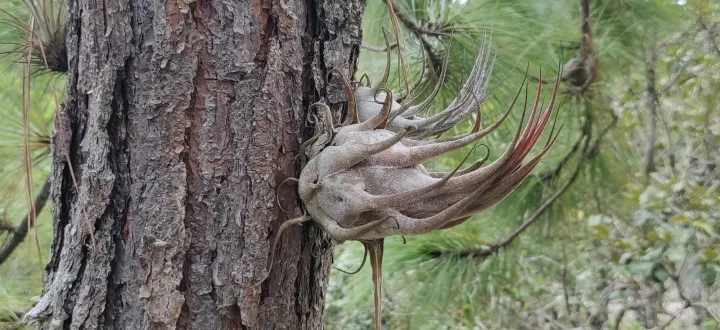
The plant is widely recognized for its unique swollen, bulbous base. This specialized structure is often inhabited by ants in the wild, which provide nutrients to the plant, making it a classic example of a myrmecophilous (ant-loving) plant species.
The entire surface of the leaves is densely covered with trichomes, which are silvery scales that absorb water and minerals from the atmosphere. These trichomes give the plant its signature grey-green appearance.
Cultivation requires bright, indirect light and excellent air circulation. Since it is an atmospheric air plant, it does not require soil and thrives when mounted on driftwood, bark, or other structures.
Optimal growth is achieved when the plant is misted or soaked in water periodically, ensuring that the base dries completely within a few hours to prevent rot. Temperature conditions should remain between 18°C and 25°C.
Main diseases and pests
The primary threat to Tillandsia seleriana is fungal rot, usually triggered by excessive moisture trapped inside the bulbous base for extended periods.
Pests such as scale insects and spider mites can infest the leaves, particularly in environments with poor air movement and low humidity levels.
Effective pest management involves manual removal of insects and the application of mild, soap-based or specialized systemic insecticides.
Plants are sensitive to mineral deposits and harsh chemicals; therefore, distilled or rainwater is recommended for hydration to maintain the health of the trichomes.
Prevention of health issues is centered on maintaining a stable environment where the plant receives high light and adequate airflow to facilitate rapid drying after watering.