
Tillandsia seideliana
Tillandsia seideliana
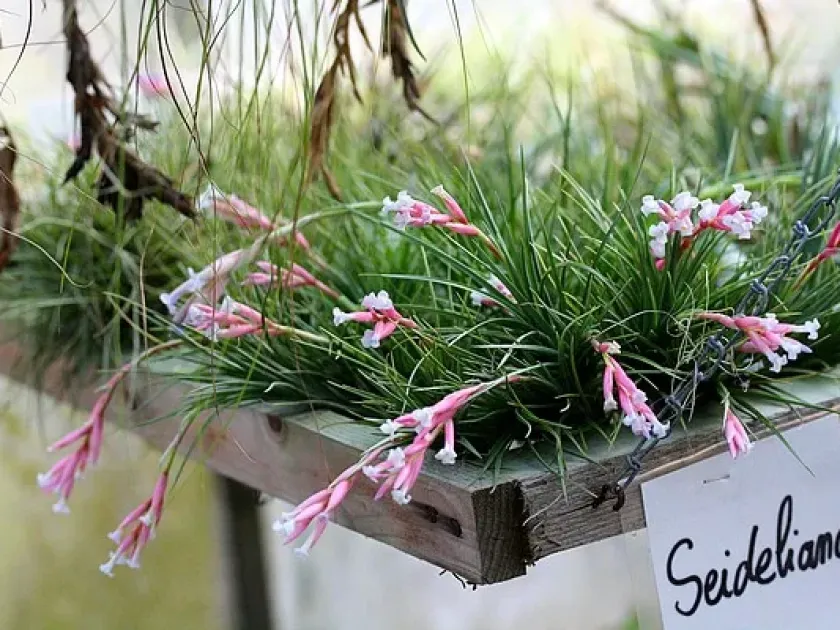
Description
Growing requirements
Tillandsia seideliana is a member of the Bromeliaceae family and is recognized as an exotic epiphytic species. Originating from the tropical regions of Brazil, it naturally thrives in high-humidity environments, attaching itself to trees or rock faces to absorb atmospheric moisture and nutrients.
Botanically, this plant displays a compact rosette of leathery, arching leaves that serve as an efficient capture system for water. During the flowering stage, it produces a vibrant, elongated inflorescence, which is the primary feature that makes it a prized specimen for specialized plant collectors.
To cultivate this species successfully, it requires bright, filtered light. Exposure to intense, direct afternoon sun can cause immediate desiccation and scorching of the foliage, so positioning in a well-lit area without direct radiation is essential for maintaining plant health.
Environmental conditions should mimic tropical forest air, with humidity levels ideally between 60% and 80%. Regular misting with high-quality, demineralized water is necessary, as the plant relies on its trichomes—specialized leaf scales—to intake water and minerals.
Regarding cultivation medium, Tillandsia seideliana does not require standard potting soil. It is best grown mounted on cork bark, driftwood, or kept in open-air displays. Providing good air circulation is crucial to prevent the accumulation of stagnant moisture around the base of the plant.
Main diseases and pests
The primary threat to the health of this species is crown rot, caused by trapped water remaining in the leaf rosette for extended periods, especially in cooler conditions. Proper orientation of the plant to allow water to drain away from the core is a vital preventative measure.
Spider mites represent the most common pest, particularly in home environments with low humidity. They feed on plant sap and can cause extensive damage to the foliage, visible as small yellow dots or webbing on the underside of leaves.
Scale insects are another potential issue, often found in hidden crevices or at the base of the leaves. These pests are resilient and require mechanical removal followed by application of systemic insecticides safe for sensitive epiphytic plants.
Mealybugs can also infest the plant, manifesting as white, cottony masses in the leaf axils. Frequent inspections and prompt isolation of infested plants are necessary to prevent the spread of these pests across a collection.
Disease management is largely dependent on maintaining adequate airflow. A well-ventilated space prevents the growth of fungi and mold, ensuring the leaves remain dry during nighttime hours, which significantly reduces the risk of opportunistic pathogens.