
Tillandsia schiedeana
Tillandsia schiedeana
Description
Growing requirements
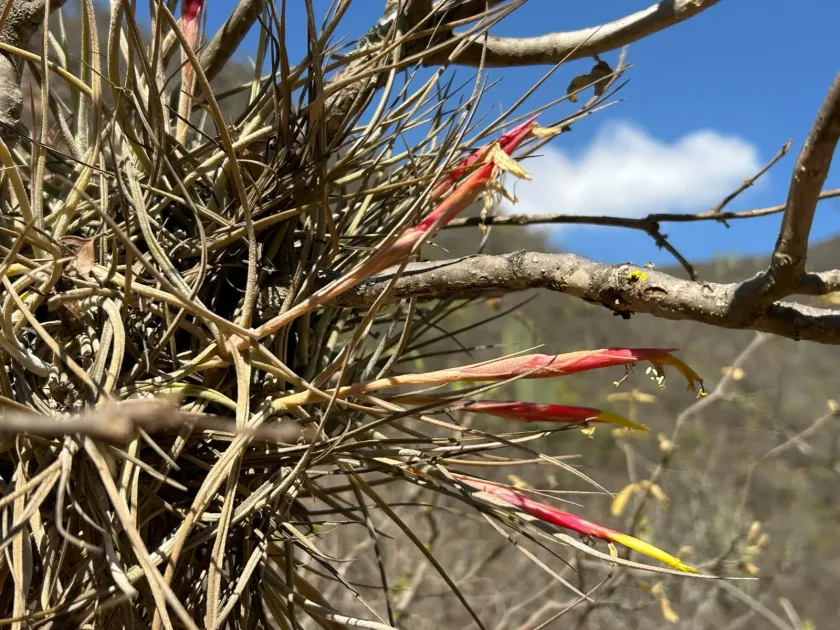
Tillandsia schiedeana is a distinctive member of the Bromeliad family, classified as an atmospheric epiphyte. In its native habitat, it grows on tree branches or rocky outcrops, relying on its specialized foliar trichomes to absorb moisture and nutrients directly from the ambient air.
The native distribution of this species spans from Mexico through Central America to northern South America. It is remarkably adaptable, capable of thriving in diverse ecosystems ranging from humid tropical forests to arid scrublands and high-altitude cliffs.
To cultivate Tillandsia schiedeana successfully, it is essential to provide bright, indirect sunlight. Direct exposure to intense mid-day sun can result in leaf scorching, so filtered light is always preferred for optimal photosynthesis and growth.
Temperature requirements are moderate, typically ranging from +20°C to +25°C. The plant should be protected from freezing temperatures and cold drafts, as these conditions are detrimental to its metabolism and can quickly lead to tissue necrosis.
The irrigation protocol involves misting the entire plant with soft, chlorine-free water or submerging it briefly to ensure thorough hydration. Following any watering procedure, it is vital to provide excellent air circulation to allow the plant to dry within a few hours, preventing core rot.
Main diseases and pests
The most significant threat to the health of this species is excessive moisture accumulation in the center of the leaf rosette. This environmental stress often leads to rapid fungal colonization and the development of severe crown rot, which is usually fatal.
Pests that commonly afflict the species include mealybugs and scale insects. These organisms thrive in sheltered areas within the leaf axils, depleting the plant of essential resources and causing stunted growth or yellowing of the foliage.
Spider mites can be problematic in indoor environments with consistently low humidity levels. These pests cause visible stippling on the leaves and can significantly weaken the plant's structural integrity if left untreated over an extended period.
Integrated pest management strategies should focus on physical removal and the application of mild, soap-based insecticidal solutions. Chemical treatments must be carefully selected to ensure they do not damage the delicate trichomes that facilitate the plant's nutrient uptake.
Maintaining a high standard of hygiene in the cultivation space and providing adequate ventilation are the best preventive measures against disease. Regular monitoring of the plant's base and leaf structure is crucial for early detection of potential threats.