
Tillandsia retorta
Tillandsia retorta
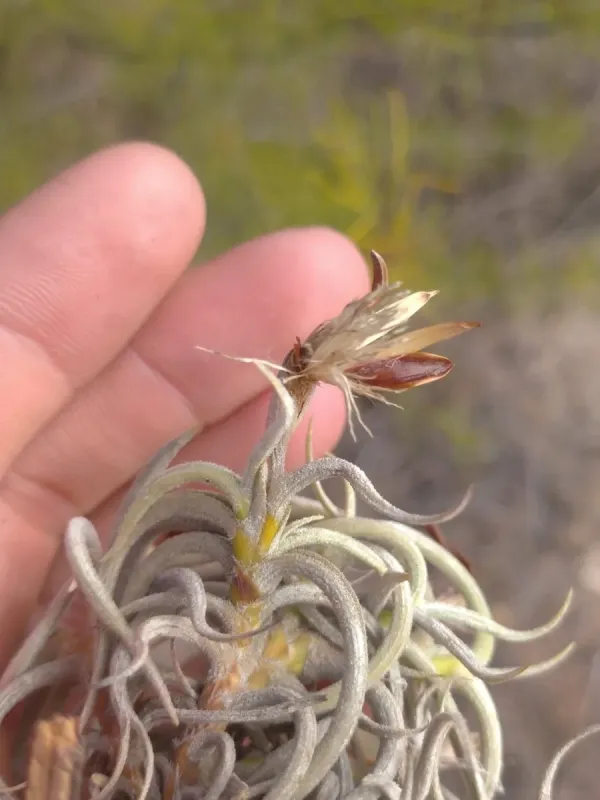
Description
Growing requirements
Tillandsia retorta is a fascinating miniature epiphyte belonging to the Bromeliaceae family. Native to the rugged landscapes of Argentina and Bolivia, this plant has evolved to survive in arid environments, clinging to the branches of trees and rocky outcrops.
The plant features a distinctive growth habit with tightly coiled, rigid leaves covered in dense silver trichomes. These specialized structures are essential for the plant's survival, as they capture moisture and dissolved nutrients directly from the ambient atmosphere.
Cultivation requires bright, indirect light to maintain its compact form and silver coloration. While it tolerates exposure to filtered sunlight, intense midday heat without proper airflow can lead to desiccation and foliage scorch.
Air circulation is perhaps the most critical factor in the plant's management. In nature, constant breezes ensure that moisture does not linger too long in the leaf axils, preventing the accumulation of pathogens and maintaining a healthy metabolic rate.
The irrigation strategy should mimic periodic rain cycles. It is best to mist the plant thoroughly or soak it in soft, room-temperature water for short periods, ensuring that the plant dries completely within four hours after watering.
Main diseases and pests
Mealybugs are the most common pests affecting this species. They tend to cluster deep within the tight leaf rosettes, making them difficult to detect and eradicate without the use of systemic insecticides or manual removal with alcohol-soaked tools.
Rot is the primary threat to the health of the plant, usually caused by overwatering or insufficient drying time. Once the core of the plant begins to decay, the process is often irreversible, leading to the collapse of the entire rosette.
Spider mites can become a problem in dry, stagnant environments. A decrease in air humidity, combined with high temperatures, provides ideal conditions for these pests to proliferate and damage the plant's surface.
Environmental stress, such as exposure to cold drafts during the winter, can lead to sudden leaf drop. It is important to maintain a stable temperature range, avoiding any sudden drops that could put the plant into shock.
Improper water quality, particularly high mineral content or chlorine, can clog the trichomes. Over time, this buildup impairs the plant's ability to absorb moisture and nutrients, leading to stunted growth and eventual decline.