
Tillandsia reducta
Tillandsia reducta
Description
Growing requirements
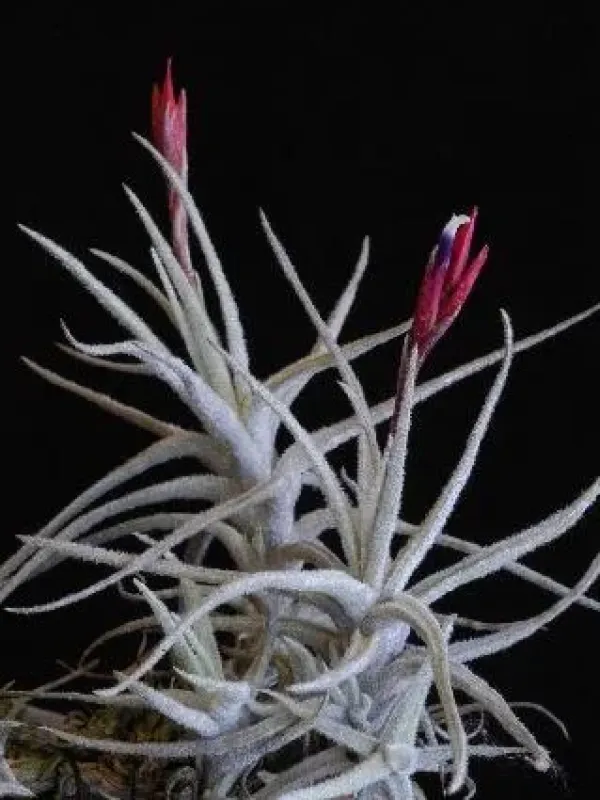
Tillandsia reducta is a perennial herbaceous plant belonging to the Bromeliaceae family. As an epiphyte native to the tropical regions of South America, it has evolved to thrive in high-humidity environments, anchoring itself to trees or rocks rather than growing in traditional soil.
The botanical structure of this species is highly specialized, featuring a tight rosette of slender leaves covered in silver trichomes. These specialized scales are critical for the plant's survival, as they function to absorb moisture, dust, and nutrients directly from the air, minimizing the need for root-based nutrient uptake.
Cultivation requires specific environmental conditions that mimic a tropical forest. The ideal temperature range for this species is between 20°C and 28°C. Cold drafts or sudden temperature drops must be avoided to prevent stress and ensure continuous growth throughout the seasons.
Light requirements are significant; the plant thrives in bright, filtered light. Direct midday sun can cause leaf scorch, while insufficient light leads to structural weakening and a loss of the plant's characteristic silvery coloration.
Regarding substrate, Tillandsia reducta does not require traditional soil. It is best grown mounted on cork bark, driftwood, or in a porous substrate mix consisting of pine bark and perlite. Proper airflow around the root system is essential to prevent rot, which is the most critical aspect of its care.
Main diseases and pests
Mealybugs represent the primary pest risk for Tillandsia reducta in managed environments. They tend to cluster deep within the base of the leaf rosettes, where they are difficult to reach, necessitating systematic inspection and the targeted use of appropriate pesticides.
Fungal rots are common, typically triggered by poor ventilation or water accumulation within the central leaf rosette during cooler periods. Once rot begins in the core of the plant, it can spread rapidly, often leading to the irreversible death of the specimen.
Spider mites are another significant threat, particularly in environments with low humidity. They feed on the plant's cell sap, causing the foliage to appear speckled or bleached; regular misting and maintaining humidity levels around 65-70% are effective preventative measures.
Scale insects can also infest the plants, attaching themselves to the leaves and draining nutrients. Manual removal combined with the application of horticultural oils or systemic insecticides is the standard approach for controlling these persistent pests.
Maintaining a clean growing area and ensuring that the plant dries out reasonably quickly after watering are the best defenses against both pathogens and insect infestations. Consistent air circulation acts as the primary deterrent for most fungal and bacterial infections.