
Small ball moss
Tillandsia recurvata
Description
Growing requirements
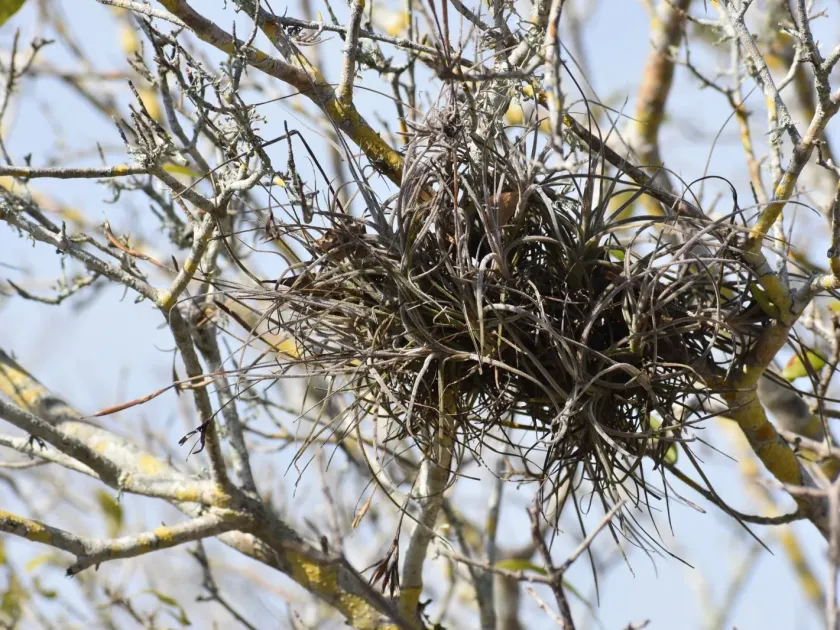
Small ball moss (Tillandsia recurvata) is a fascinating epiphytic species belonging to the Bromeliaceae family. Unlike terrestrial crops, it thrives by attaching itself to trees, shrubs, and even man-made structures like utility lines, relying entirely on the atmosphere for nutrients and moisture.
Native to the Americas, this species is found from the southern United States through Central America and down to Argentina. It has evolved to inhabit various ecosystems, ranging from arid scrublands to humid tropical forests, showcasing remarkable environmental flexibility.
The plant possesses specialized leaf structures known as trichomes. These microscopic scales are responsible for absorbing water and dissolved nutrients directly from the air, fog, and dew, allowing the plant to survive without any soil connection.
In cultivation, this species requires high levels of bright, indirect light to maintain its compact, grayish-green form. Air circulation is paramount; stagnant air can lead to moisture retention that the plant is not biologically adapted to handle for extended periods.
Its primary use is in ornamental horticulture and botanical research regarding epiphytic adaptation. While not a conventional agricultural food crop, it holds significant ecological value as a bioindicator of air quality and as a subject for experimental vertical gardening.
Main diseases and pests
Fungal rots represent the primary threat to Tillandsia recurvata, typically triggered by poor air circulation and excessive moisture trapped within the dense cluster of leaves. Once rot sets in at the base, it can quickly become fatal for the individual clump.
Mealybugs are common pests that find refuge deep within the plant’s tight foliage, making them difficult to eradicate once an infestation has taken hold. These insects sap the plant’s energy and can lead to secondary infections.
Scale insects can also infest this species, attaching themselves to the leaves and draining nutrients. Manual removal combined with systemic horticultural oils is often the most effective way to manage these pests without damaging the sensitive trichome layer.
Spider mites may appear in overly dry environments, particularly indoors during winter months. Regular misting can help deter these pests, although care must be taken to ensure the plant dries out completely within a few hours.
General stress factors, such as tap water with high mineral content, can lead to salt accumulation. This residue blocks the plant's ability to absorb nutrients, gradually weakening its health over time.