
Tillandsia purpurea
Tillandsia purpurea
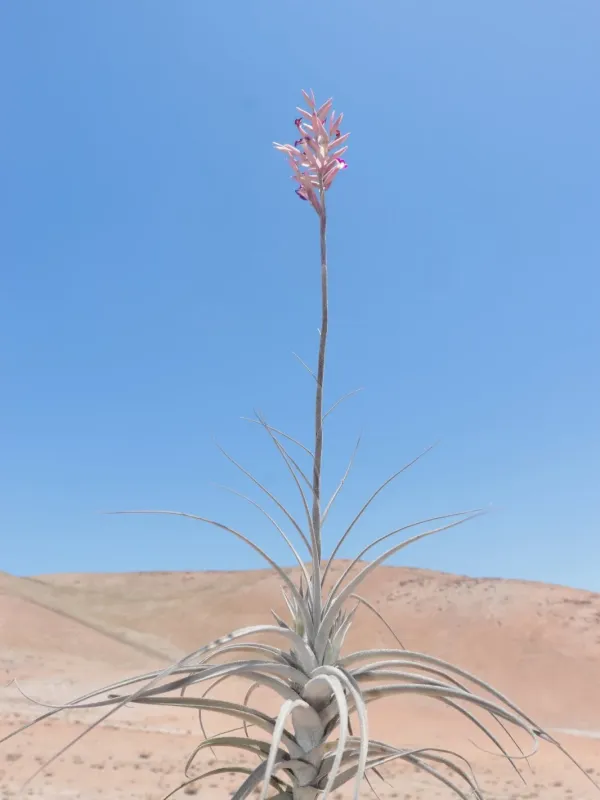
Description
Growing requirements
Tillandsia purpurea is a fascinating member of the Bromeliad family (Bromeliaceae). Native to the coastal deserts of Peru, this plant is an atmospheric epiphyte that has evolved to thrive in arid conditions by absorbing water and nutrients through specialized leaf scales called trichomes.
Unlike traditional crops, this plant requires no soil for growth. In cultivation, it is typically mounted on driftwood, cork, or wire frames, which allows the plant's structure to remain exposed to open air, mimicking its natural desert environment.
The cultural requirements demand bright, indirect light to maintain the plant's health and coloration. Direct, intense sunlight can scorch the foliage, while insufficient light leads to etiolation and a loss of the compact, rosette-like form that is highly prized.
Hydration is achieved through regular misting or soaking in soft, room-temperature water. It is critical to ensure that the plant dries completely within a few hours after watering to prevent the accumulation of moisture, which is the primary cause of decay.
Temperature management is straightforward, as the plant prefers stable conditions between 18°C and 25°C. Good ventilation is non-negotiable; constant air movement mimics the breezy coastal conditions where this species naturally occurs.
Main diseases and pests
The most significant threat to Tillandsia purpurea is crown rot, caused by trapped water within the tight center of the rosette. Once rot sets in, it spreads quickly, often making the plant unsalvageable.
Mealybugs are a common pest in indoor environments. These insects hide in the crevices of the leaves and suck out sap, which can stunt growth and leave the plant vulnerable to secondary bacterial or fungal infections.
Spider mites can also become a problem in low-humidity environments. Their presence is often indicated by fine webbing and stippling on the leaves, which disrupts the photosynthetic ability of the plant.
Scale insects are another potential concern, appearing as small, waxy bumps on the leaf surface. These are difficult to remove manually and often require a targeted application of insecticidal soap or horticultural oil.
Mineral buildup from hard water is a silent threat. Over time, calcium and magnesium deposits clog the trichomes, preventing the plant from absorbing moisture, which effectively dehydrates the plant even when it is being watered regularly.