
Tillandsia punctulata
Tillandsia punctulata
Description
Growing requirements
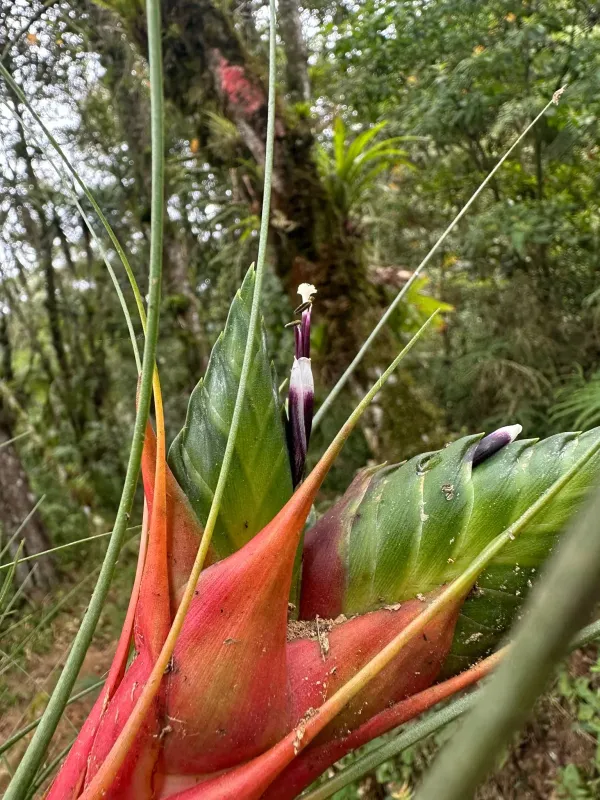
Tillandsia punctulata is a distinguished epiphytic species belonging to the Bromeliaceae family. Originating from the humid forests of Central America, this plant has adapted to survive on branches and tree trunks, relying on atmospheric moisture and nutrients gathered through specialized trichomes on its foliage.
The plant exhibits a distinct morphological structure, characterized by a bulbous base that tapers into narrow, vibrant green leaves often tinged with purple. These leaves are covered in fine, hair-like structures that function as a moisture-trapping mechanism, which is essential for survival in its natural tropical habitat.
Agrotechnical management requires precise control over environmental parameters. The plant thrives in high humidity conditions, typically between 60% and 80%, and requires frequent, light misting. It is imperative that the water does not pool in the leaf axils, as this leads to rapid decay and core rot.
Temperature management is another key factor for successful cultivation. Tillandsia punctulata prefers a moderate climate, maintaining an average range of 18°C to 26°C. While the plant can tolerate short periods of cooler temperatures, prolonged exposure to cold drafts or freezing conditions should be strictly avoided.
Proper lighting is vital for the health and coloration of the plant. A location with bright, filtered sunlight provides the optimal spectrum for photosynthesis. It is recommended to use 50% shade cloth in greenhouse environments to prevent UV damage while ensuring the plant receives enough light to maintain its structural integrity.
Main diseases and pests
Common pests affecting this crop include mealybugs and spider mites, which thrive in low-humidity environments. Integrated pest management strategies, such as physical removal and the application of neem oil or targeted insecticides, are recommended for maintaining plant health.
Disease outbreaks are typically related to poor airflow and excessive moisture levels. Bacterial rot is the most serious threat, often presenting as softened, discolored tissues at the base of the rosette. Proper sanitation and ensuring the plant dries completely after misting are the primary preventative measures.