
Tillandsia pruinosa
Tillandsia pruinosa
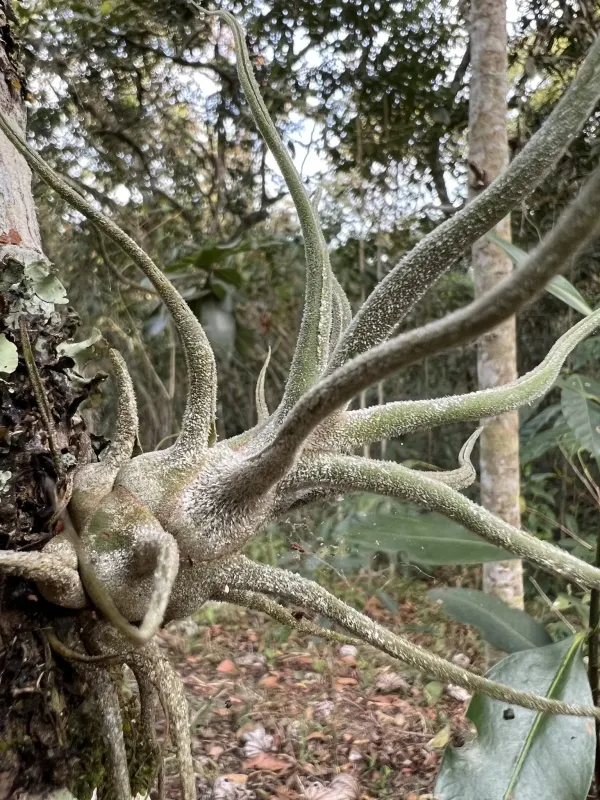
Description
Growing requirements
Tillandsia pruinosa is a distinctive species belonging to the Bromeliaceae family. As an epiphyte native to the tropical regions of Central and South America, it grows primarily on tree branches rather than in the soil, utilizing its specialized structure for survival.
The core of its agrotechnical requirements involves mimicking its natural habitat. This includes high atmospheric humidity, ideally ranging between 60% and 80%, to support the plant's ability to absorb nutrients through its foliar trichomes.
Temperature management is vital, with a preferred range of 18°C to 25°C. Like most air plants, it thrives in environments that avoid extremes, as consistent warmth helps maintain the metabolic activity required for periodic blooming.
Proper lighting is essential for health. While it requires bright light to maintain its signature silvery frost-like appearance, direct exposure to harsh midday sun must be avoided to prevent thermal damage to the leaf tissue.
The cultivation method relies on mounting the plant on driftwood, cork, or other inert materials. Air circulation is paramount, as the plant needs to dry out relatively quickly after watering to mimic its native windy forest canopy environment.
Main diseases and pests
The most common pests affecting Tillandsia pruinosa include mealybugs and scale insects. These pests often settle in the tight leaf axils, making early detection and manual removal critical for plant survival.
Overwatering remains the primary threat to this crop. If water accumulates in the center of the rosette for extended periods, the plant becomes highly susceptible to crown rot, which is often fatal if not caught immediately.
Poor ventilation promotes the growth of fungi and mold. In enclosed spaces, it is necessary to provide mechanical air movement to ensure that leaves do not remain waterlogged for too long after misting or soaking.
In case of pest infestation, use specific horticultural oils or mild insecticidal soaps. Always ensure that any product applied to the plant is compatible with sensitive epiphytic bromeliads to avoid chemical burns.
Maintaining a clean, balanced environment with excellent airflow is the best preventive strategy against both biotic and abiotic stressors, ensuring the longevity and aesthetic quality of the specimen.