
Tillandsia prodigiosa
Tillandsia prodigiosa
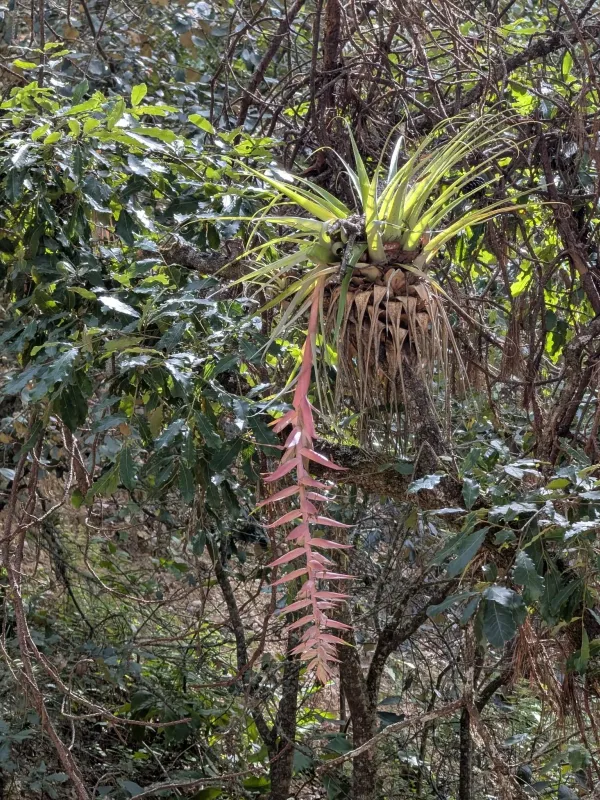
Description
Growing requirements
Tillandsia prodigiosa is a spectacular species of epiphytic plant belonging to the Bromeliaceae family. Native to the mountainous cloud forests of Mexico, it grows primarily on tree branches, where it thrives in conditions of high atmospheric humidity and moderate, stable temperatures typical of high-altitude habitats.
The botanical structure of this species is defined by a large, rigid rosette of leaves and a prominent, highly branched inflorescence. Unlike terrestrial crops, it functions as an aerophyte, absorbing moisture and nutrients directly from the air through specialized microscopic structures on its leaves known as trichomes.
Agricultural requirements for this species focus on providing an environment that mimics its natural habitat. This includes maintaining consistent air movement, which is essential to prevent moisture stagnation within the leaf rosette. Cultivation requires mounting the plant on bark or wood rather than planting it in a soil-based medium.
Watering is managed via misting, using soft water to prevent mineral buildup on the leaves. Fertilization, if necessary, should be applied as a very dilute liquid solution, ensuring the plant is never waterlogged, as it is highly susceptible to decay in stagnant, overly saturated environments.
Lighting management is crucial for the health of Tillandsia prodigiosa. The plant prefers bright, indirect light to simulate the dappled shade of the forest canopy. While it can withstand bright light, excessive exposure to direct sun can lead to rapid dehydration and irreversible damage to the foliage.
Main diseases and pests
The primary agricultural threat to this species is fungal decay resulting from poor air circulation and excessive moisture trapped in the core of the rosette. Ensuring rapid drying of the foliage after misting is the most effective cultural practice to mitigate these risks and maintain overall plant vigor.
Common pests include mealybugs and spider mites, which thrive in dry indoor environments. Pest management programs should prioritize mechanical removal or the use of horticultural oils and soaps that are safe for use on bromeliads, ensuring they do not clog the trichomes that are vital for the plant's nutrient uptake.