
Tillandsia plagiotropica
Tillandsia plagiotropica
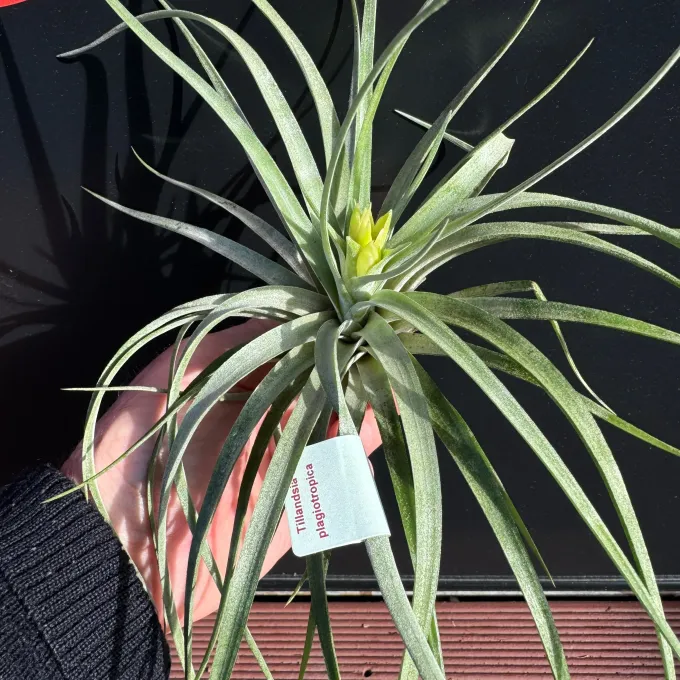
Description
Growing requirements
Tillandsia plagiotropica is a rare and highly sought-after atmospheric epiphyte belonging to the Bromeliaceae family. Native to the mountain cloud forests of Guatemala, this species thrives in environments with high ambient humidity and constant airflow.
Cultivation requirements necessitate an environment with temperatures consistently between 18 and 25 degrees Celsius. It is crucial to maintain stability, as significant fluctuations can stress the plant and inhibit its natural growth cycle.
This species requires bright, filtered light to perform photosynthesis effectively. Direct midday sunlight must be strictly avoided, as it can cause irreversible damage to the foliage, causing it to bleach or develop necrotic lesions.
Unlike terrestrial crops, Tillandsia plagiotropica does not utilize soil. The most effective horticultural practice is to mount the plant on natural wood, cork bark, or driftwood, allowing its roots to attach firmly for structural support.
Irrigation should be performed using only soft water, such as rainwater or purified water. Mist the plant thoroughly, ensuring the leaves are moistened, but avoid leaving stagnant water in the center of the rosette to prevent tissue decay.
Main diseases and pests
Common pests affecting this species include mealybugs and spider mites, which typically exploit dry conditions and poor ventilation. Frequent observation and manual removal are the most effective initial control measures.
The most significant threat to its survival is rot, triggered by water accumulation in the rosette when the temperature is too low or airflow is insufficient. Proper aeration is the primary defense against fungal and bacterial decay.
Accumulation of minerals from hard tap water can damage the trichomes, which are specialized scales that absorb water and nutrients from the air. Over time, this blockage prevents the plant from hydrating properly.
Lack of proper humidity levels, falling below 60 percent, makes the plant susceptible to drying out and lowers its resistance to opportunistic pathogens. A consistent humidity regime is vital for long-term health.
If chemical interventions are necessary, only pesticides safe for delicate epiphytes should be used. Always perform a patch test on a small section of a leaf before applying any treatment to the entire plant.