
Tillandsia peiranoi
Tillandsia peiranoi
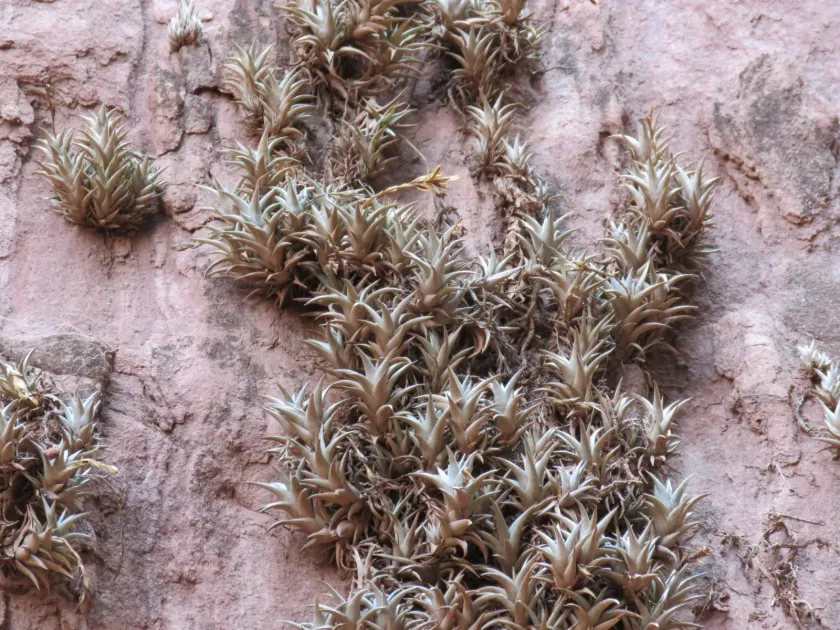
Description
Growing requirements
Tillandsia peiranoi belongs to the Bromeliaceae family. It is a compact, slow-growing epiphytic plant native to the arid rocky regions of Argentina, where it naturally anchors itself onto cliffs or tree bark.
This species is classified as an atmospheric (air) plant. It lacks a functional root system for soil nutrient uptake; instead, its roots serve primarily as an anchor to hold the plant securely in its environment.
The plant requires bright, filtered light to thrive. While it prefers high light levels, direct afternoon sun can scorch its delicate, silver-trichome-covered leaves, so bright indirect light is ideal for indoor settings.
The optimal temperature range for this species is between 18°C and 25°C. It is important to maintain stable conditions and protect the plant from cold drafts, which can cause significant physiological stress.
Watering is performed exclusively through misting or occasional soaking with soft, room-temperature water. During active growth, it requires consistent moisture cycles followed by quick drying to prevent rot.
Main diseases and pests
The greatest threat to Tillandsia peiranoi is overwatering or water accumulation within the leaf rosettes. Because the plant relies on leaf surfaces to absorb moisture, stagnant water at the base quickly causes decay.
Common pests include mealybugs and spider mites. These pests thrive in dry indoor air and can quickly weaken the plant if not detected early, often hiding between the tightly packed leaves.
Fungal infections are common when air circulation is poor. High humidity without adequate ventilation creates a breeding ground for pathogens that can rot the plant's core within a few days.
Disease prevention is based on ensuring quick drying times after misting. Keeping the plant in an area with good airflow is essential to mimic its natural, wind-exposed habitat in Argentina.
If an infestation occurs, specialized mild organic insecticides or diluted soap solutions are recommended. Avoid heavy synthetic chemicals, as air plants are highly sensitive to fertilizers and concentrated additives.