
Tillandsia paleacea
Tillandsia paleacea
Description
Growing requirements
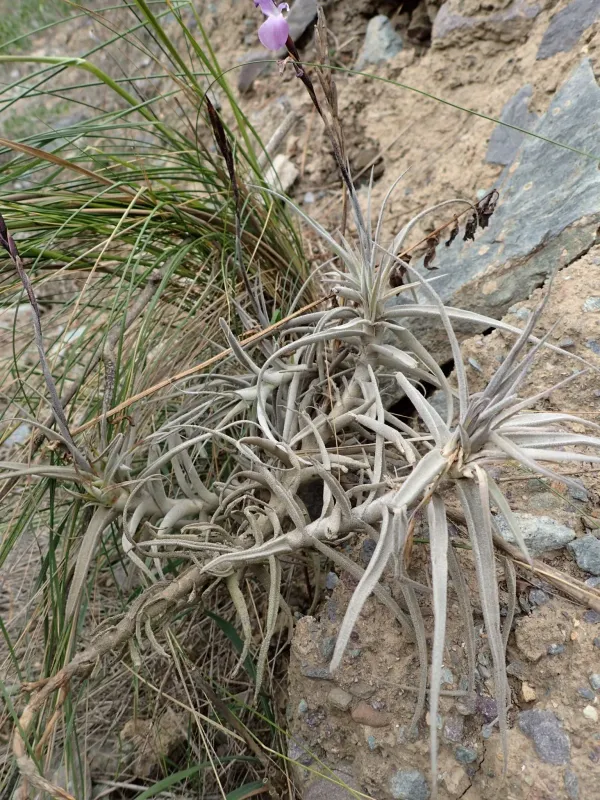
Tillandsia paleacea is a unique species of air plant belonging to the Bromeliaceae family. Native to the arid regions of Peru and Bolivia, this epiphyte has evolved to thrive in environments with minimal water availability, relying on its specialized morphology to absorb moisture from the atmosphere.
The botanical structure of this plant features a dense rosette of narrow, silver-toned leaves. These leaves are densely covered with microscopic structures known as trichomes. These scales act as sponges, effectively capturing dew, fog, and moisture from the surrounding air, which is essential for the plant's metabolic processes.
For optimal growth, Tillandsia paleacea requires bright, filtered sunlight. Exposure to intense, direct afternoon sun can damage the foliage and lead to excessive dehydration. Proper placement in an area with high ambient light but good shading during the hottest parts of the day is critical for plant health.
Cultivation requires no soil, as the plant is an epiphyte. It is typically mounted on decorative materials such as bark, driftwood, or metal grids. The key to successful agricultural management of this species is maximizing airflow; stagnant air around the plant will almost inevitably lead to decay.
Regarding climate, the plant prefers temperatures ranging between 18°C and 26°C. While it is quite resilient, avoiding rapid temperature fluctuations is important. Humidity should be maintained through regular misting, ensuring that the plant is allowed to dry out completely within a few hours to prevent rot.
Main diseases and pests
The most common threat to Tillandsia paleacea is fungal rot, which is triggered by excessive moisture lingering in the center of the leaf rosette. If the plant remains wet for too long, pathogenic fungi can quickly destroy the core, making recovery virtually impossible.
Pests such as mealybugs and spider mites are also significant threats. These pests thrive in indoor environments where air circulation may be limited. They hide in the tight crevices between the leaves, draining the plant's vitality and causing stunted growth.
Effective management includes regular monitoring and prompt intervention. If a pest infestation is detected, mechanical removal or the use of mild horticultural soaps is recommended. It is vital to avoid harsh chemical pesticides that can clog the plant's trichomes and inhibit gas exchange.
Disease prevention is primarily a matter of hygiene and environment. Keeping the cultivation area clean and ensuring that the plant is not overcrowded are simple but effective measures that reduce the risk of infection. Always remove dead leaves to prevent potential fungal outbreaks.
Water quality is another critical factor. Using tap water high in mineral salts or chlorine can lead to the buildup of residues on the leaf surface, which clogs the trichomes and suffocates the plant over time. Using distilled, rainwater, or purified water is highly recommended for long-term health.