
Tillandsia oaxacana
Tillandsia oaxacana
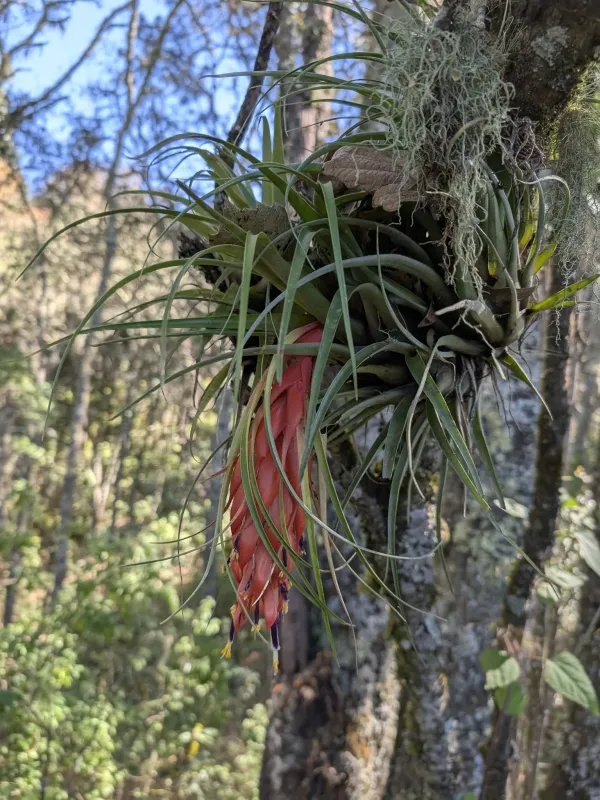
Description
Growing requirements
Tillandsia oaxacana is a fascinating epiphytic species belonging to the Bromeliaceae family. It is renowned for its unique ability to thrive without soil, utilizing specialized trichomes on its leaves to absorb water and nutrients directly from the air and atmospheric moisture.
The plant originates from the mountainous regions of Oaxaca, Mexico. Its natural habitat is characterized by cool, misty conditions found at high elevations, which allows the plant to sustain itself despite the lack of a traditional root system for soil nutrient uptake.
Botanically, this species forms a rosette of narrow, silver-hued foliage. The greyish-white color is a result of a dense covering of trichomes, which are adaptations designed to minimize water loss and protect the plant from high levels of ultraviolet radiation found in the mountains.
Cultivation requires bright, indirect light to maintain the plant's health and typical silvery appearance. Direct sunlight should be avoided to prevent thermal stress, especially during the hottest parts of the day when the ambient air temperature increases significantly.
Watering should be performed by misting or soaking the plant in distilled or rainwater. It is essential that the plant dries completely within a few hours of watering to mimic its natural environment and prevent tissues from becoming waterlogged, which can lead to rapid decay.
Main diseases and pests
The primary threat to the health of Tillandsia oaxacana is crown rot caused by stagnant water trapped in the base of the rosette. Inadequate air circulation is the main environmental factor that contributes to this lethal condition during domestic cultivation.
Pests such as mealybugs and spider mites are frequent invaders of epiphytic bromeliads. These insects thrive in dry, stagnant air conditions and can cause significant damage to the delicate leaf structures if left unchecked for an extended period.
Improper water quality can also pose a threat; using water high in mineral salts leads to the calcification of trichomes. Once the leaf pores are clogged with mineral deposits, the plant loses its ability to absorb moisture efficiently and will gradually decline.
Integrated pest management involves physical removal of insects using soft brushes or localized application of mild horticultural oils. Chemical treatments must be used with caution, ensuring that the substances are safe for epiphytes and do not block the plant's respiration pores.
Preventative measures include placing the plant in an area with constant airflow, such as near a window that allows for natural ventilation. A healthy, well-ventilated plant is significantly more resistant to fungal infections and insect infestations.