
Tillandsia novakii
Tillandsia novakii
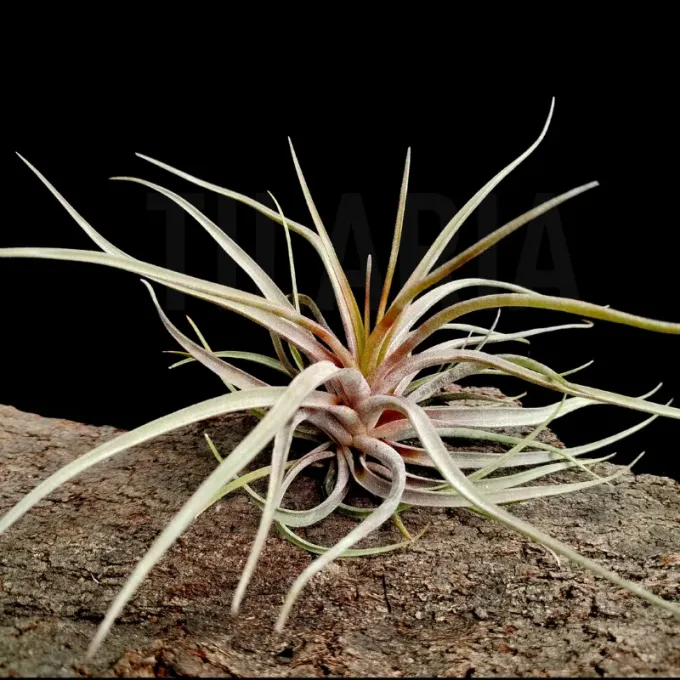
Description
Growing requirements
Tillandsia novakii is a rare species of epiphytic plant belonging to the Bromeliaceae family. Originating from the mountainous regions of Mexico, this species has adapted to survive on rocky outcrops and tree branches, drawing moisture and nutrients from the atmosphere.
For successful indoor or greenhouse cultivation, it is essential to replicate its natural habitat. The plant requires bright, filtered light to thrive. Direct sunlight, especially in the afternoon, should be avoided as it can scorch the delicate foliage and damage the plant structure.
The temperature should be maintained within a moderate range, typically between 18 and 24 degrees Celsius. A significant diurnal temperature variation is necessary to stimulate the biological processes required for growth and to induce flowering in mature specimens.
Irrigation is performed through misting or by submerging the plant in soft, room-temperature water. Maintaining high air humidity, ranging from 60 to 70 percent, is vital. Proper air circulation is just as important as humidity to ensure that the plant dries out appropriately.
Tillandsia novakii does not require traditional soil as it is an epiphyte. It is best grown mounted on cork bark or wooden slabs. This method provides the necessary support while ensuring that the root system—which primarily serves for anchorage—remains well-aerated.
Main diseases and pests
The primary threat to Tillandsia novakii is water stagnation. If water collects in the center of the rosette for too long, especially in environments with poor air circulation, it leads to crown rot, which is often fatal to the plant within a very short period.
Mealybugs are the most common pests, often hiding deep within the tight leaf bases where they are difficult to spot. Their feeding can significantly weaken the plant, making it susceptible to secondary fungal infections that compromise its overall health.
Spider mites can also be problematic if the humidity levels drop significantly. These pests feed on the cellular sap, resulting in discolored, mottled foliage. Prevention involves regular misting and maintaining a stable, humid microclimate around the plant.
Fungal diseases can emerge when the plant is kept in overly damp and stagnant conditions. Signs include brown or black spots on the leaves. Immediate corrective action involves improving ventilation and allowing the plant to dry out slightly before the next misting session.
Care must be taken when using any chemical treatments, as bromeliads can be sensitive to harsh pesticides. Whenever possible, mechanical removal of pests or the use of organic soap solutions is recommended to keep the Tillandsia novakii healthy and vibrant.