
Tillandsia neglecta
Tillandsia neglecta
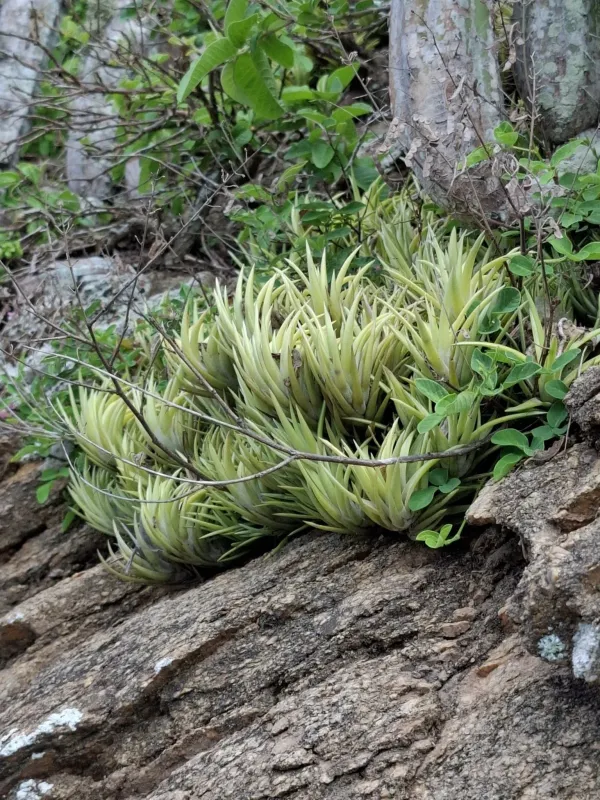
Description
Growing requirements
Tillandsia neglecta is a distinct species within the Bromeliad (Bromeliaceae) family. Known as an atmospheric air plant, it is native to the tropical forests of Brazil, where it grows as an epiphyte on the branches of canopy trees, absorbing moisture and nutrients directly from the air.
The plant thrives in warm, humid conditions with temperatures ranging from 18 to 26 degrees Celsius. Because it lacks a functional root system for soil-based nutrient uptake, it requires high ambient humidity and regular air circulation to maintain its metabolic processes.
Cultivation requires mounting the plant on porous materials such as cork bark, driftwood, or specialized wire grids. It should never be planted in traditional soil mixes, as the roots are highly susceptible to rot when kept in damp, oxygen-deprived environments.
Regarding light, Tillandsia neglecta prefers bright, indirect sunlight. Exposure to harsh afternoon sun should be strictly avoided to prevent scorching the foliage, which is covered in specialized trichomes designed to capture water and nutrients from the atmosphere.
Agronomic maintenance involves misting the plant 2–3 times per week with soft, room-temperature water. During the growth phase, a diluted fertilizer formulated for epiphytic bromeliads can be applied once a month to support development and flowering, ensuring excess water drains away quickly.
Main diseases and pests
The most significant threat to the plant's health is crown rot, caused by trapped moisture in the central leaf rosette coupled with poor airflow. Once rot settles in the base, it often spreads rapidly, making early detection and immediate drying of the plant essential.
Common pests include mealybugs and scale insects, which hide within the dense leaf structures. Spider mites may also appear in dry conditions, requiring the grower to increase humidity and apply appropriate organic horticultural oils to keep the plant infestation-free.