
Tillandsia nana
Tillandsia nana
Description
Growing requirements
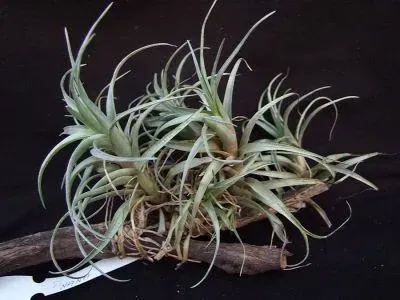
Tillandsia nana is a miniature species belonging to the Bromeliad family (Bromeliaceae). Originating from the high-altitude regions of Peru, this plant has adapted to survive as an epiphyte, clinging to bark or rocks in environments where water is available primarily as mist or dew.
The plant features a compact, rosette-like growth habit with slender leaves densely covered in trichomes. These specialized scales function as an absorptive surface, capturing humidity and atmospheric nutrients, which is crucial given the plant's minimal root system.
Cultivation requires a specific microclimate that mimics its native habitat. Ideal conditions involve high ambient humidity levels and consistent, bright, indirect light. Placing the plant in a location with good air circulation is essential to prevent moisture buildup in the leaf axils.
Temperature management is vital for the health of Tillandsia nana. It thrives best in a range between 18°C and 24°C. Exposure to extreme cold or scorching direct sun should be avoided at all costs, as these factors quickly lead to tissue desiccation or frost damage.
Maintenance involves regular misting with distilled or rainwater. In dry indoor environments, soaking the entire plant in water once a week can provide necessary hydration, provided it is allowed to dry completely within a few hours to prevent rot.
Main diseases and pests
The most common disease affecting this species is root and heart rot, triggered by stagnant water trapped in the center of the rosette. Proper orientation of the plant to allow water to drain away is the primary preventive measure against fungal pathogens.
Pest attacks, specifically from mealybugs and spider mites, can occur in low-humidity environments. Control measures include isolating the affected specimen and using specialized horticultural soaps or diluted systemic insecticides to eliminate the infestation.