
Tillandsia muhriae
Tillandsia muhriae
Description
Growing requirements
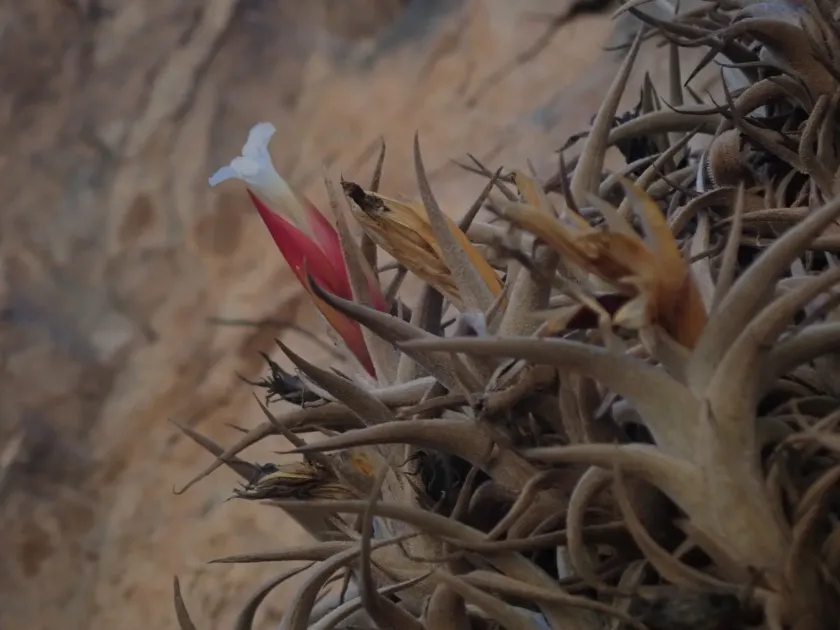
Tillandsia muhriae is a perennial herbaceous plant belonging to the Bromeliad family (Bromeliaceae). It originates from the high-altitude regions of Mexico, where it grows as an epiphyte, colonizing tree branches and rocky outcrops in environments characterized by high humidity and frequent mist.
Botanically, this species is defined by its compact rosette structure, consisting of narrow, silvery-green leaves. These leaves are densely covered with trichomes, which are specialized absorbent scales that act as a primary mechanism for nutrient and moisture uptake from the atmosphere.
To successfully cultivate this plant, it is essential to maintain high relative humidity levels, ideally between 60% and 75%. Proper air circulation is just as vital as moisture; stagnant air around the rosette base can quickly lead to physiological stress and root system decline.
The optimal temperature range is between 18°C and 24°C during the day, with a cooler phase at night. The plant thrives under bright, filtered light conditions. Direct sunlight is generally too intense and can lead to thermal stress and dehydration of the leaf tissues.
For substrate, it is best to use coarse bark, pumice, or mount the plant directly onto driftwood or cork bark. The root system should never be buried in dense, water-retentive soils, as the roots are adapted primarily for structural support and attachment rather than nutrient absorption.
Main diseases and pests
The most significant threat to Tillandsia muhriae is fungal infection, usually triggered by excessive moisture accumulation in the center of the rosette combined with poor ventilation. Rot often progresses rapidly and can be difficult to manage once it affects the base of the plant.
Pests such as mealybugs and spider mites are frequent invaders, especially in indoor environments where air humidity might drop below optimal levels. These insects can be difficult to spot in the dense foliage, so routine checks are necessary for effective management.
Chemical treatments should be approached with caution. Many insecticides can damage the sensitive trichomes on the leaves. It is generally recommended to use systemic products specifically formulated for delicate epiphyte species and only at diluted concentrations.
Improper fertilization is another factor that can negatively impact plant health. Since these plants derive nutrients from the air and water, high concentrations of mineral fertilizers can cause salt burn on the leaves, leading to stunted growth or tip necrosis.
Quarantine practices are essential when introducing new plants into a collection to prevent the spread of mites or scale. Maintaining a clean growing environment and monitoring water quality are the foundational elements for ensuring the longevity of this unique specimen.