
Tillandsia mollis
Tillandsia mollis
Description
Growing requirements
Tillandsia mollis is a fascinating species of epiphytic plant belonging to the Bromeliaceae family. Originating from the mountainous regions of Bolivia, it has adapted to life on rocks and branches, drawing its sustenance primarily from the surrounding air and moisture.
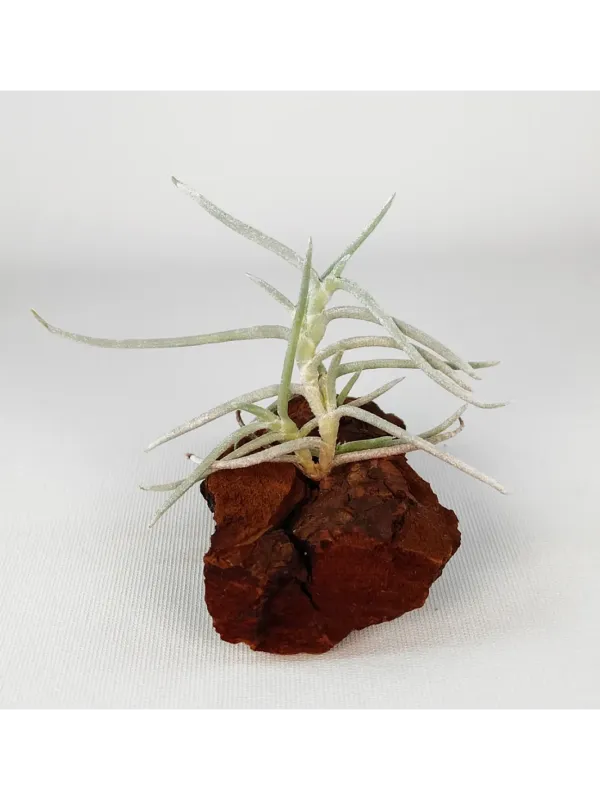
The plant is defined by its compact, silver-grey rosette of leaves. These leaves are densely covered in trichomes—specialized scales that capture moisture and nutrients from the atmosphere, allowing the plant to thrive without traditional soil-based roots.
Cultivation of this species requires mimicking its natural high-altitude environment. It performs best under bright, indirect light. Intense, direct sunlight should be avoided during the peak hours of the day to prevent leaf dehydration and tissue damage.
Temperature control is essential for healthy growth. The plant thrives in temperate conditions, typically ranging from 18 to 24 degrees Celsius. It also requires excellent airflow to ensure that its foliage dries out relatively quickly after hydration.
Watering techniques are specific for Tillandsia mollis. The plant should be misted or submerged in soft, room-temperature water periodically. After hydration, it is crucial to shake off excess moisture from the center of the rosette to prevent internal rot.
Main diseases and pests
The primary threats to Tillandsia mollis are fungal and bacterial infections, which are often the result of poor ventilation and excessive moisture. Rotting at the base of the plant is a common issue if the environment remains stagnant and humid for too long.
Insect pests such as mealybugs and scale insects pose a secondary risk. These pests hide in the crevices of the leaf bases, extracting sap and weakening the plant. Their presence can lead to stunted growth and secondary infections from the honeydew they produce.
Preventative maintenance involves regular visual inspection of the plant's health. By keeping the plant in a well-ventilated area and ensuring the foliage dries completely within a few hours of watering, the risk of pathogen development is significantly reduced.
Treatment for infestation includes cleaning the affected areas with a gentle soap solution or using systemic insecticides suitable for epiphytic plants. It is important to avoid strong chemicals that could damage the sensitive trichomes on the leaf surface.
Cultivators should prioritize environmental stability. A consistent schedule of light, airflow, and targeted irrigation will ensure that Tillandsia mollis remains resilient against typical household and greenhouse pests.