
Tillandsia mitlaensis
Tillandsia mitlaensis
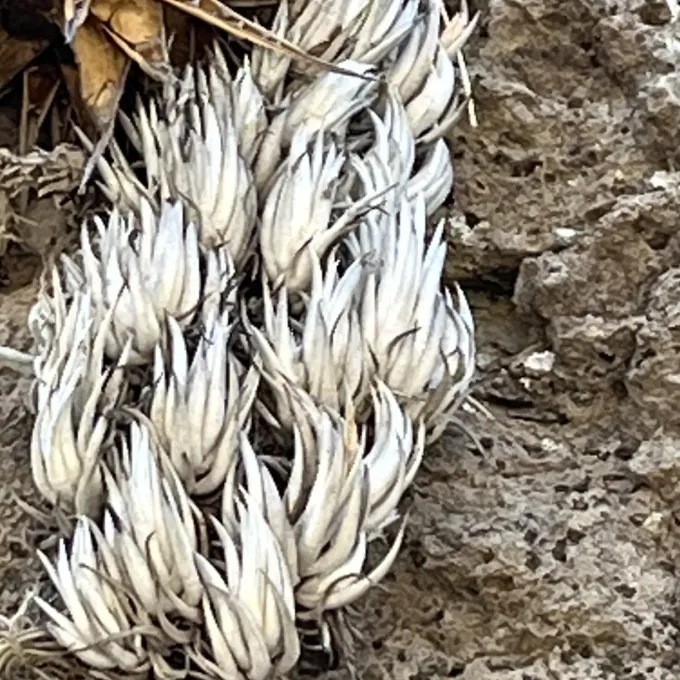
Description
Growing requirements
Tillandsia mitlaensis is a fascinating species belonging to the Bromeliaceae family. It is recognized as an epiphyte or lithophyte, meaning it typically anchors itself to rocks or tree branches in its natural habitat without requiring soil for nutrition.
The plant is native to the state of Oaxaca, Mexico. It thrives in high-altitude rocky environments, which has allowed the species to develop specific adaptations for surviving in regions with seasonal moisture and varying temperatures.
To successfully cultivate this plant, bright, indirect light is essential. It performs best in airy environments where light is abundant, but intense, direct afternoon sun should be avoided to prevent desiccation of the foliage.
Watering protocols involve misting the entire plant or soaking it in filtered, room-temperature water. After watering, it is crucial to ensure the plant dries completely within a few hours to replicate the natural airflow it receives in the wild.
Temperature requirements are relatively moderate, typically ranging from 18 to 25 degrees Celsius. While it can withstand cooler nights, it is sensitive to frost and should be kept away from cold drafts to maintain its structural integrity.
Main diseases and pests
The most significant threat to Tillandsia mitlaensis is water accumulation within its leaf rosettes. If moisture remains trapped for too long, it inevitably leads to crown rot, which is often fatal to the plant.
Pest management is focused on controlling mealybugs and scale insects. These pests often hide deep within the dense leaf bases, making them difficult to detect until a significant infestation has occurred.
Spider mites can also be problematic if the humidity levels drop significantly for an extended period. Regular inspection of the undersides of the leaves and maintaining adequate ambient air circulation can mitigate these risks effectively.
Fungal infections can emerge if the plant is kept in an environment with poor ventilation. Using systemic fungicides is generally not recommended unless the infestation is severe, as the plant's trichomes are sensitive to chemicals.
Care must be taken when using fertilizers; always use specialized bromeliad food at a diluted concentration. Over-fertilizing can lead to leaf burn and the accumulation of mineral salts that interfere with the plant's natural nutrient uptake.