
Tillandsia marconae
Tillandsia marconae
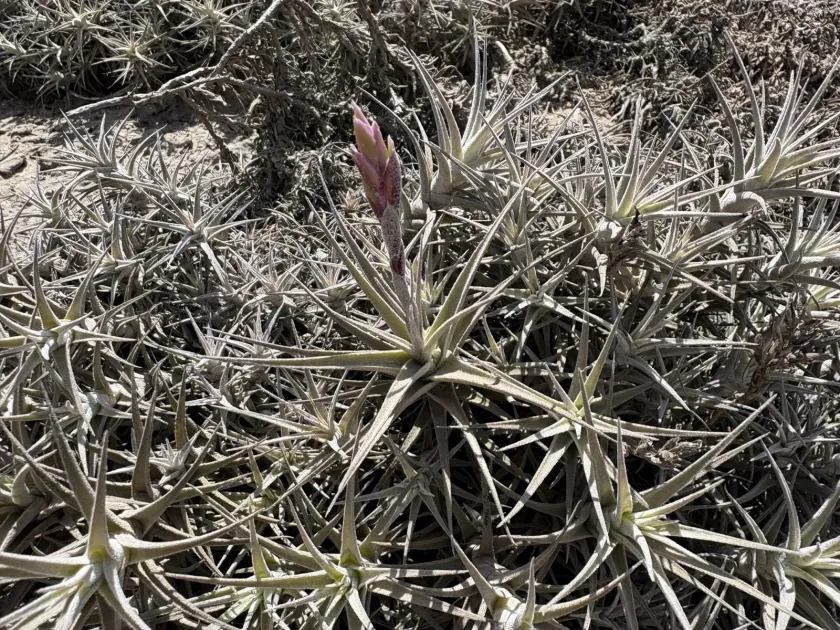
Description
Growing requirements
Tillandsia marconae is a distinct species within the Bromeliaceae family, known for its epiphytic growth habit. Native to the mountainous regions of South America, this plant is naturally adapted to survive on tree branches, thriving in humid forest environments where it collects moisture from the air.
The morphology of the plant is defined by its rosette of stiff leaves, which are densely covered in trichomes. These specialized structures are essential for the survival of the plant, as they function as scales that absorb water and minerals from atmospheric moisture.
Cultivating Tillandsia marconae requires a stable environment with high relative humidity, typically ranging between 60% and 80%. It is crucial to maintain good airflow, as stagnant air can lead to fungal issues even in environments that otherwise seem perfect for the species.
Lighting should be bright but diffused; intense direct sunlight can desiccate the plant and scorch its delicate leaves. A location near a south-facing window with a thin curtain or an east-facing window is usually ideal for healthy growth.
Regarding temperature, the plant prefers a temperate climate. Ideal ranges are 20–25°C during the day with a slight temperature drop at night. This mimics the natural highland environment and is beneficial for the plant's physiological respiration process.
Main diseases and pests
The most prevalent risk for Tillandsia marconae is the accumulation of water in the base of the leaf rosette. If the water does not dry out within a few hours, it creates an environment favorable for bacterial and fungal rot, which can kill the plant quickly.
Pests, particularly mealybugs, represent a recurring threat. These insects can hide deep within the leaves, making them difficult to detect until the plant starts to show signs of decline, such as yellowing or stunted growth.
Mineral salt accumulation from hard water is another major threat. Since the plant absorbs water through its leaves, using water with high mineral content can clog the trichomes, effectively preventing the plant from 'breathing' and absorbing necessary nutrients.
Fungal pathogens can occasionally infect the base of the plant if the mounting substrate remains constantly soaked. Using rot-resistant mounting materials such as cork bark or driftwood is essential to mitigate these risks effectively.
To prevent disease, it is recommended to keep the plant in a well-ventilated area and avoid over-fertilization. Using a specialized low-nitrogen fertilizer designed for bromeliads once a month is sufficient during the active growing season.