
Tillandsia macbrideana
Tillandsia macbrideana
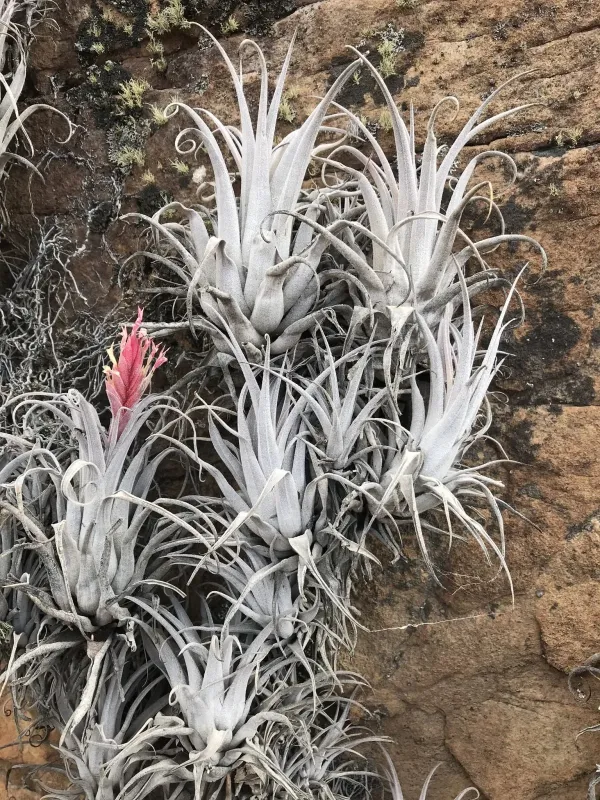
Description
Growing requirements
Tillandsia macbrideana is a specialized species belonging to the Bromeliaceae family. Native to the mountainous regions of Peru, this plant is an epiphyte that naturally thrives on rocks and tree branches in high-altitude arid environments.
The cultivation of this plant requires specific environmental settings, primarily focusing on high levels of bright, indirect sunlight. Because it is an epiphyte, it does not require a traditional growing medium, favoring bark or wooden mounts for optimal aeration.
Temperature management is crucial, as the plant responds well to natural diurnal temperature shifts. Keeping temperatures between 18 and 25 degrees Celsius during the day ensures vigorous growth, provided the area is well-ventilated.
Moisture is absorbed through specialized structures on the leaves known as trichomes. To maintain hydration, the plant should be misted with soft, low-mineral water regularly, ensuring that the water evaporates completely within a few hours to prevent rot.
Economically, this species is used primarily for ornamental purposes. Its unique morphology and adaptation to harsh environments make it a highly sought-after plant for exotic greenhouses, vertical gardens, and home interior decor.
Main diseases and pests
Fungal diseases are the most common threats to the plant, usually triggered by improper watering schedules or poor air circulation. Stagnant water within the leaf rosette is a primary cause of tissue decay and plant death.
Mealybugs are the most frequent pests associated with Tillandsia macbrideana. They tend to hide deep within the dense leaf bases, making manual removal or systemic treatment necessary to prevent colony expansion.
Scale insects can also infest the leaves, feeding on plant sap and weakening the structure. Regular inspections are advised to catch these pests early, as they can be easily missed against the plant's natural greyish-green foliage.
The accumulation of mineral salts from hard water can damage the trichomes, effectively choking the plant and preventing nutrient uptake. Using distilled or rainwater is recommended to avoid long-term physiological stress.
For chemical control, only dilute solutions should be used. Given the plant's delicate exterior, it is advisable to test any new pesticide on a small portion of the plant before applying it to the entire specimen to avoid foliage burn.