
Scaly-sepal tillandsia
Tillandsia lepidosepala
Description
Growing requirements
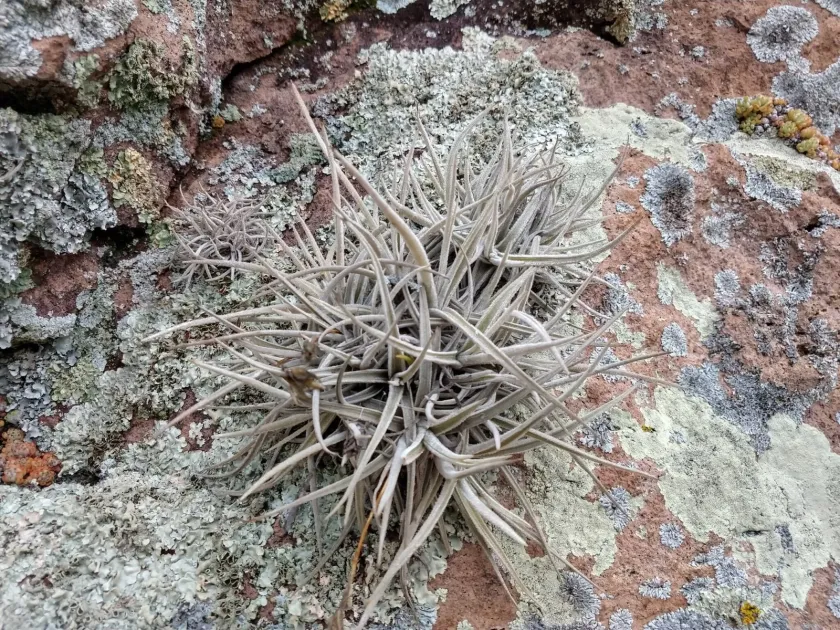
Tillandsia lepidosepala is a fascinating member of the Bromeliaceae family, native to the mountainous landscapes of Mexico. This species is widely recognized as a xerophytic air plant, having evolved to thrive in environments where ground soil is unavailable, utilizing its surroundings for structural support rather than nutrient intake.
The botanical architecture of this plant is defined by its tight, dense rosette of thick leaves. These leaves are densely covered in trichomes—specialized scales that give the plant a silvery-grey appearance and function as an efficient mechanism to capture water droplets and nutrients directly from the ambient air.
Regarding cultivation requirements, the plant demands bright, indirect sunlight to maintain its structural integrity and color. It requires a stable temperature range between 18°C and 24°C, accompanied by excellent air circulation, which is vital for preventing moisture stagnation within the leaf base.
Agrotechnical management differs significantly from traditional crops, as there is no need for soil. Irrigation should be performed through misting with soft water, ensuring the plant dries completely within a few hours. Proper aeration after misting is the most critical factor for maintaining the plant's health.
In terms of economic and practical utility, Tillandsia lepidosepala is a premium ornamental plant. It is widely used in indoor phytodesign, botanical displays, and as a centerpiece in terrariums, where its unique slow-growth habit and silvery texture add significant aesthetic value to specialized plant collections.
Main diseases and pests
The most common pests affecting this species include mealybugs and scale insects, which can easily hide within the dense leaf rosettes. If detected, these pests should be removed manually or treated with extremely mild, non-oil-based organic pesticides to avoid damaging the trichome layer.
Diseases are predominantly related to incorrect irrigation practices. Crown rot is the primary threat, typically caused by excessive water retention in the center of the rosette combined with poor ventilation, which encourages the rapid growth of opportunistic fungi and bacteria, leading to the rapid decay of the plant.