
Tillandsia juncea
Tillandsia juncea
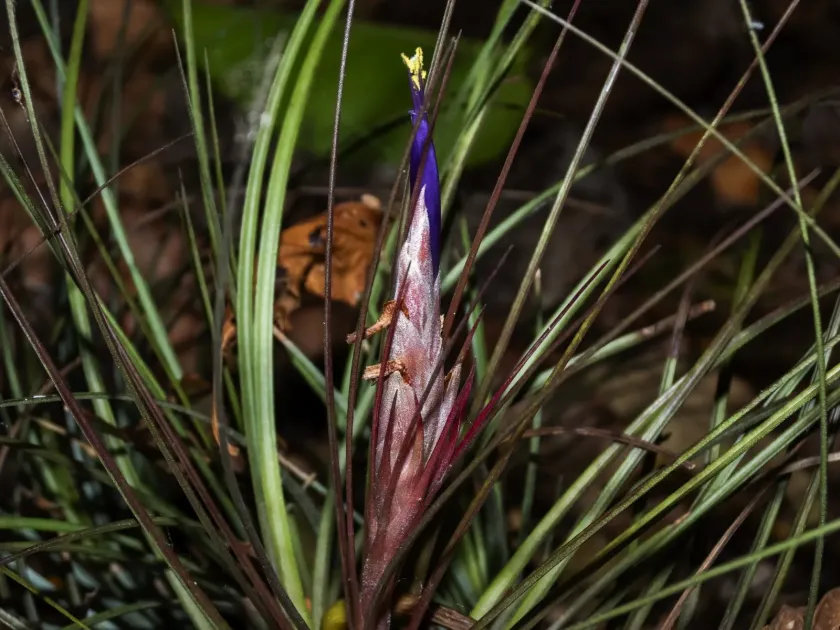
Description
Growing requirements
Tillandsia juncea is an attractive species within the Bromeliaceae family, widely known for its grass-like, stiff leaf structure. Native to a range spanning from Mexico and Central America to the West Indies, it is an epiphyte that typically grows on tree branches rather than in soil.
The plant is characterized by its slender, silver-green leaves covered in specialized trichomes. These structures are essential for the plant’s survival, as they act as scales that trap moisture and nutrients from the air, allowing the plant to thrive without traditional root contact with the ground.
In terms of climate requirements, this plant prefers bright, indirect light. While it can handle some early morning sun, intense midday exposure should be avoided to prevent leaf dehydration and heat stress. A consistent environment is key to its long-term development.
Temperature management should focus on maintaining a range between 18°C and 26°C. While the species is relatively resilient, it must be protected from sudden temperature drops or cold drafts, which can negatively impact the health of the leaf cells.
Humidity is the most critical factor in its maintenance. Cultivators should simulate a tropical environment by misting the foliage or soaking the plant in non-mineralized water for 15–20 minutes once or twice a week, followed by a thorough drying process to prevent rot.
Main diseases and pests
Common pests for Tillandsia juncea include mealybugs and scale insects. These pests often congregate at the base of the leaves where moisture is trapped, making them difficult to detect until the infestation becomes significant.
Rot is the most severe threat to the species, usually caused by stagnant water remaining in the leaf axils for too long. If the center of the plant becomes dark or soft, it indicates that the plant is not drying sufficiently between watering sessions.
Spider mites can become a nuisance if the plant is kept in an environment with low humidity and high heat. Infestations manifest as fine webbing and pale spots on the leaves, which can be mitigated by regular moisture and proper airflow.
Fungal infections can occur when the plant is kept in damp, dark, and poorly ventilated areas. Preventive care includes removing any debris from the leaf axils and ensuring that the plant is positioned in a spot with constant, gentle air circulation.
To ensure plant health, it is recommended to inspect the foliage monthly. If any signs of distress occur, reducing watering frequency and increasing ambient airflow are the primary corrective measures to restore the plant's vigor.