
Tillandsia ixioides
Tillandsia ixioides
Description
Growing requirements
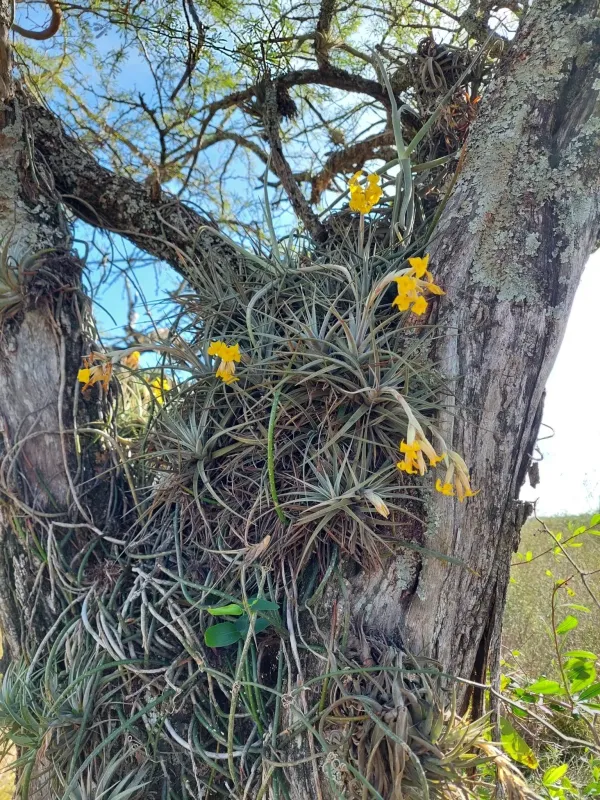
Tillandsia ixioides is a fascinating epiphytic species belonging to the Bromeliaceae family. Native to the diverse regions of South America, particularly areas in Argentina and Uruguay, it thrives as an air plant, attaching itself to trees and rocky outcrops in its natural habitat.
The botanical structure of this species is highly adapted for survival in variable environments. Its narrow, stiff leaves are covered in dense silvery scales known as trichomes, which are specialized structures capable of absorbing moisture and nutrients directly from the ambient air.
Unlike conventional agricultural crops, Tillandsia ixioides does not require a soil-based medium. It is best grown mounted on wood, bark, or porous stone, allowing its limited root system to anchor firmly while keeping the foliage free from soil-borne pathogens.
The plant requires bright, filtered sunlight to maintain health and induce blooming. In interior environments, it is crucial to place the specimen in a well-ventilated area to ensure that the moisture from watering evaporates within a few hours to prevent stagnant conditions.
Care routines involve regular misting with soft or distilled water. During the growing season, a balanced, diluted fertilizer designed for air plants can be applied sparingly to enhance growth and support the production of the plant's distinctive, colorful inflorescence.
Main diseases and pests
The most significant threat to the plant's longevity is overwatering, which leads to core rot. If the heart of the rosette remains wet for extended periods, bacteria can cause rapid tissue decay, often resulting in the total loss of the specimen within a few days.
Pests such as scale insects and mealybugs are the primary threats. These pests hide deep within the crevices of the leaves, where they feed on sap. Regular inspection and the application of mild insecticidal soap are effective methods for maintaining a clean and healthy population.
Spider mites represent a risk, particularly in environments with extremely low humidity levels. These pests thrive in dry air, causing the leaves to lose their luster and health, necessitating either improved humidity management or specific acaricide treatments.
Salt accumulation from hard water or excessive fertilization can interfere with the function of the trichomes. Over time, this clogging limits the plant's ability to absorb water, leading to dehydration despite consistent misting, thus highlighting the need for high-quality water sources.
Proper air circulation serves as the primary defense against almost all fungal and bacterial infections. By ensuring that the plant is never placed in a stagnant or humid environment for too long, the risks of pathogen colonization are kept to a minimum.