
Tillandsia ionantha
Tillandsia ionantha
Description
Growing requirements
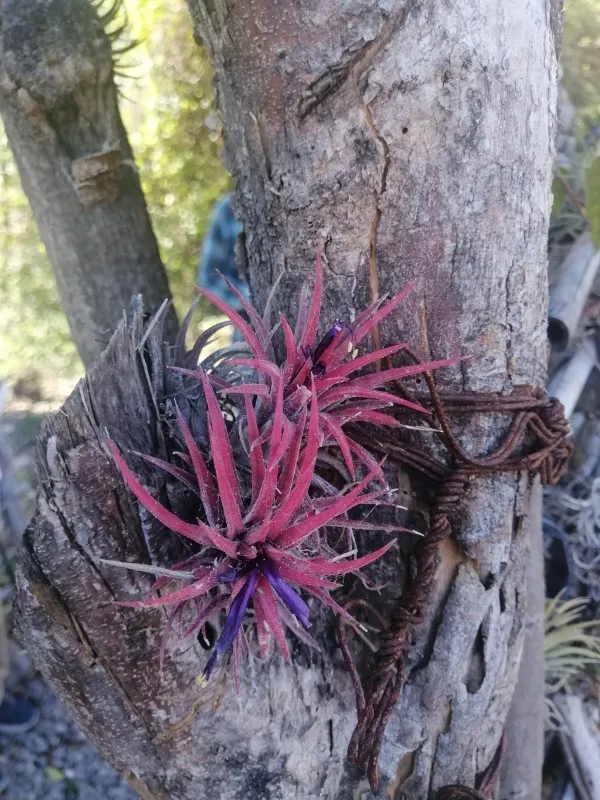
Tillandsia ionantha is a miniature epiphytic species belonging to the Bromeliaceae family. It is native to the tropical regions of Central and South America, where it naturally anchors itself onto tree branches and cliffs.
The cultivation of this plant requires bright, indirect sunlight. In professional nursery settings, the use of shading systems is necessary to prevent leaf scorching, especially during peak solar activity hours.
Optimal temperatures for development range from 18 to 25 degrees Celsius. Ensuring constant airflow is crucial to simulate the plant's natural environment and prevent the accumulation of stagnant moisture.
Humidity management is the cornerstone of its agrotechnics. Maintaining levels between 60% and 80% through automated fogging systems ensures that the plant absorbs sufficient moisture through its trichomes.
Since the root system serves primarily for attachment, the plant is grown on substrates such as pine bark, cork slabs, or decorative mounts, avoiding any soil or potting media that could lead to root rot.
Yield
Tillandsia ionantha is primarily a decorative crop used in floriculture and interior design. Its commercial value lies in its aesthetic transition to vibrant red colors during the blooming cycle.
The production process is based on vegetative propagation. Once the parent plant flowers, it produces offset 'pups' which are separated for further growth. This process allows for continuous inventory rotation.
Commercial yields are optimized through vertical farming techniques. By mounting plants on panels or wire grids, producers can maximize output per square meter while maintaining excellent air circulation.
The typical cycle from an offset to a marketable plant is approximately 6 to 12 months, depending on the cultivar and the environmental control system implemented in the greenhouse.
Market quality is determined by the compact structure of the rosette, the health of the trichomes, and the depth of the foliage color, which often serves as a primary selling point for consumers.
Main diseases and pests
The most significant threat to Tillandsia ionantha is fungal rot, specifically crown rot, which occurs if water collects in the center of the leaf rosette and fails to evaporate quickly.
Mealybugs are the most persistent insect pests, often hiding deep within the dense leaf bases. Integrated pest management, including the use of systemic insecticides, is required to maintain crop health.
Scale insects can also infest the plants, causing structural damage to the leaves. Regular scouting is essential to identify infestations before they spread across the production batch.
Hard water accumulation is a common issue that causes mineral deposits on the leaf surface. These deposits interfere with the plant's ability to absorb nutrients and water through its specialized scales.
Poor ventilation is a frequent oversight that leads to mold development. To mitigate this, growers should install high-capacity ventilation systems to ensure the foliage dries out thoroughly after misting.