
Tillandsia hirta
Tillandsia hirta
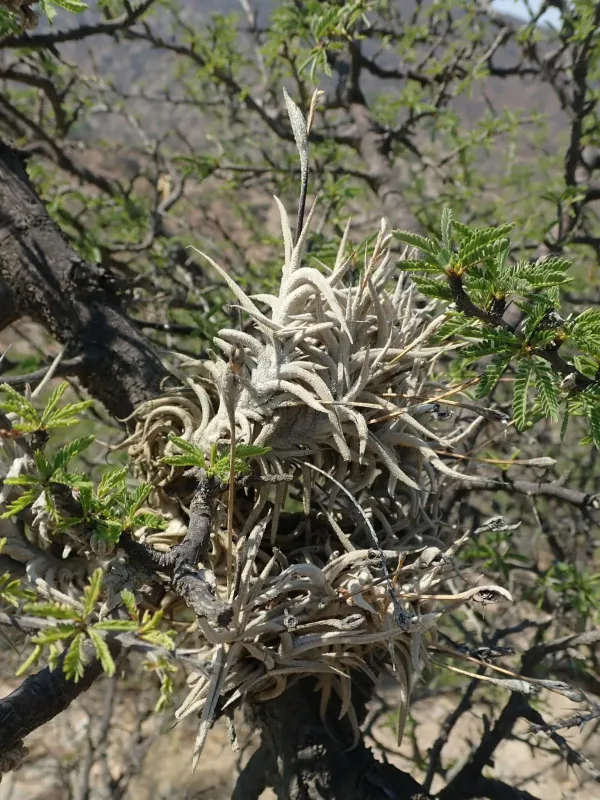
Description
Growing requirements
Tillandsia hirta is a perennial epiphytic plant species within the Bromeliaceae family. As an epiphyte, it does not root in the soil but rather anchors itself to trees, rocks, or other structures in its natural habitat.
The species originates from the tropical regions of the Americas. It has evolved to thrive in environments with high humidity and consistent temperatures, where it absorbs water and nutrients through specialized leaf scales called trichomes.
In cultivation, Tillandsia hirta requires bright but indirect sunlight. Direct tropical sun can lead to leaf scorching, while insufficient light levels may stunt growth and prevent the plant from reaching its full developmental potential.
Optimal environmental conditions involve temperatures between 18°C and 25°C. Good air circulation is vital, as it allows the foliage to dry relatively quickly after watering, which prevents moisture from stagnating within the rosette.
Growing media typically consist of driftwoods, bark slabs, or decorative wire mesh. Since the roots of this plant are primarily functional as holdfasts, they should not be submerged in soil or dense potting compost.
Main diseases and pests
The most critical threat to Tillandsia hirta is crown rot, caused by trapped moisture at the base of the rosette. Proper orientation of the plant—usually mounted at an angle—is essential to facilitate drainage after irrigation.
Pest management is focused on controlling mealybugs and spider mites. These insects tend to hide between the tightly packed leaf bases, making them difficult to detect until the plant's health begins to decline visibly.
Fungal pathogens often appear if humidity is high but air circulation is stagnant. Such conditions encourage the growth of mycelium, which can compromise the structural integrity of the plant's epidermis.
Dehydration is a significant risk in indoor environments with low humidity. If the plant is not misted or soaked regularly, it will lose its rigidity and eventually turn brown, starting from the leaf tips inwards.
Water quality issues are also a major concern. Softened water or water with high mineral content can cause salt buildup on the leaves, clogging the trichomes and preventing the plant from absorbing necessary atmospheric moisture.
Harvesting
The primary economic use of Tillandsia hirta is within the ornamental plant industry. It is highly sought after by collectors and interior designers for vertical gardens, terrariums, and artistic floral arrangements.
Propagation is primarily vegetative. After the blooming cycle is complete, the mother plant produces offsets or pups. Once these pups develop to approximately one-third of the mother plant's size, they are carefully separated to continue growth independently.
The harvest and distribution of this plant require careful logistics. Plants are typically shipped in well-ventilated containers to maintain gas exchange and prevent physiological stress caused by excessive moisture or heat buildup.
For commercial success, growers prioritize the visual quality of the foliage. Proper maintenance ensures that the trichomes remain clean and functional, which gives the plant its characteristic silvery or vibrant appearance.
Harvesting techniques in a greenhouse setting involve selective pruning of aged basal leaves to stimulate new growth. This ensures the plant remains vigorous and aesthetically appealing for retail or landscape display purposes.