
Tillandsia harrisii
Tillandsia harrisii
Description
Growing requirements
Tillandsia harrisii is a unique epiphytic plant belonging to the Bromeliaceae family. Native to the rocky, arid regions of Guatemala, this species has adapted to survive in environments with limited water availability and high solar radiation.
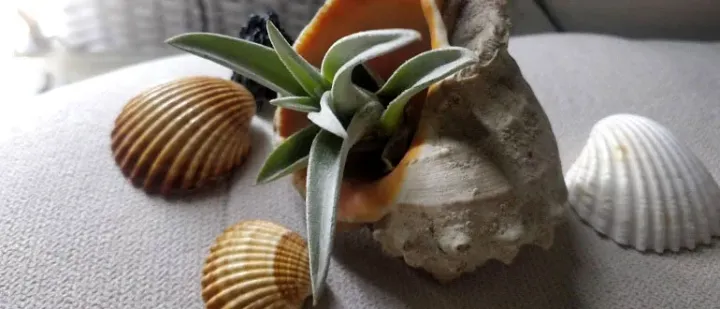
The plant features a stiff, rosette-forming structure covered in dense silvery trichomes. These specialized scales are essential for the plant's survival, as they facilitate the direct uptake of atmospheric moisture and mineral nutrients, replacing the function of roots.
Successful cultivation requires high levels of bright, indirect light and excellent air circulation. Since it does not grow in soil, it must be mounted on decorative wood, stone, or cork, ensuring that the base does not remain constantly wet to prevent rot.
Temperature management is vital, with an ideal range between 18°C and 25°C. Growers should provide hydration through regular misting or periodic soaking, allowing the plant to dry completely within a few hours to mimic its natural cycles.
The primary economic use of Tillandsia harrisii is within the ornamental plant industry. It is highly sought after by enthusiasts for terrariums and living art installations due to its slow growth rate and unique structural aesthetic.
Main diseases and pests
Common pests affecting Tillandsia harrisii include mealybugs and spider mites, which thrive in stagnant, dry air. Fungal pathogens are also a significant risk, typically occurring when water accumulates in the leaf axils for too long during periods of low light or poor ventilation.