
Tillandsia gerdae
Tillandsia gerdae
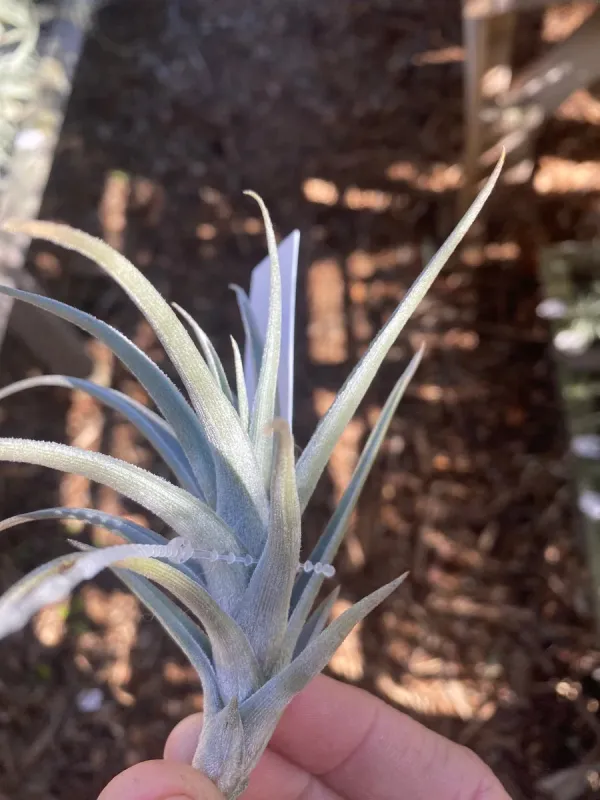
Description
Growing requirements
Tillandsia gerdae is a specialized epiphytic plant belonging to the Bromeliad family. Originating from the mountainous regions of South America, it naturally thrives on tree branches and rocks, functioning as an "air plant" that derives its moisture and nutrients directly from the atmosphere.
The plant features a distinct, compact rosette composed of slender, silvery leaves. These leaves are covered with specialized scales known as trichomes, which are essential for moisture absorption and protecting the plant from excessive solar radiation in its native habitat.
To cultivate this species successfully, one must maintain bright, indirect light levels. Avoid placing the plant in direct sunlight for extended periods, as this can easily dehydrate the leaf tissue and cause irreversible burning of the foliage.
Temperature requirements are generally moderate, ranging between 18°C and 25°C. It is vital to provide good air circulation, as Tillandsia gerdae requires constant airflow to remain healthy and to prevent moisture buildup within the leaf structure.
Irrigation should be performed by misting or soaking the plant in soft, room-temperature water. After watering, it is crucial to ensure that the plant dries completely within a few hours to prevent stagnant water from causing internal decay.
Main diseases and pests
The most significant threat to Tillandsia gerdae is rot, specifically affecting the center of the rosette. This condition is almost always caused by improper watering techniques, where excess water remains trapped in the leaf base for too long, encouraging fungal pathogens.
Mealybugs are the most common pest found on this species. These insects prefer to cluster in the tightly packed spaces between leaves, making them difficult to detect until they have already caused noticeable damage to the plant's health and appearance.
Spider mites can also become a problem if the ambient humidity levels drop significantly. These tiny pests weave fine webs and sap the plant's vitality, leading to faded or chlorotic leaves that eventually drop off.
To mitigate these risks, growers should maintain a consistent humidity level and provide adequate ventilation. Regular cleaning of the plant by rinsing with tepid water can also help mechanically remove potential pests and dust.
When chemical treatments are necessary, it is essential to use formulations specifically labeled as safe for epiphytes and Bromeliads, as some general-purpose pesticides can be harmful to the plant's delicate trichome structure.