
Tillandsia geminiflora
Tillandsia geminiflora
Description
Growing requirements
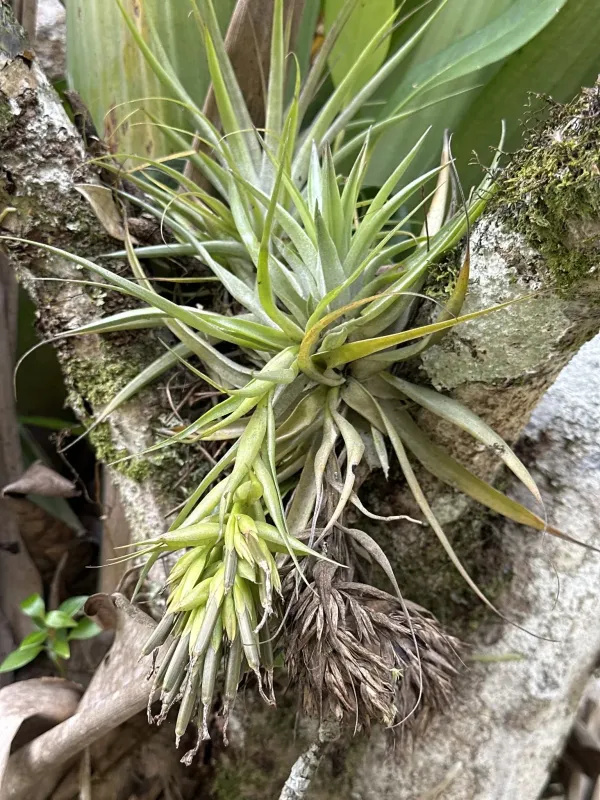
Tillandsia geminiflora is a distinct species of epiphytic plant belonging to the Bromeliaceae family. Native to the tropical regions of South America, particularly Brazil and Argentina, this plant thrives by attaching itself to trees, utilizing them as a physical support rather than a nutritional source.
The plant is defined by its rosette of narrow, recurved leaves, which are covered in dense scales known as trichomes. These specialized structures are essential for the plant's survival, as they absorb moisture and airborne nutrients directly from the environment, bypassing the need for a soil medium.
Optimal growth requires bright, filtered light. While the plant appreciates morning sun, harsh afternoon rays can scorch the foliage. Placing the plant in a spot with good air circulation is crucial to mimic its natural habitat and prevent stagnation of humidity.
Temperature requirements for this species are relatively standard for tropical flora, typically ranging between 18°C and 25°C. The plant can withstand cooler temperatures for short durations, but consistent frost should be strictly avoided to prevent tissue damage.
Watering should be done by misting the entire plant or submerging it in deionized or rainwater. It is vital to ensure that the plant dries out within a few hours after watering; allowing the center of the rosette to remain saturated for too long will lead to decay.
Main diseases and pests
Mealybugs are the most common pest found on Tillandsia geminiflora. They typically cluster deep within the base of the rosette, where they are protected by the tightly packed leaves, making them difficult to detect until an infestation is well-established.
Root rot, while less common than in terrestrial plants, can still occur if the plant is kept too damp at the base. This is usually a sign of poor drainage or lack of adequate air movement around the plant's foundation, which is necessary to keep it healthy.
Scale insects may also affect the plant, appearing as small bumps on the leaves. These pests reduce the vigor of the plant by extracting sap and can be removed manually or treated with horticultural oils formulated for delicate epiphytes.
Spider mites are a major threat during dry winter months when indoor humidity levels drop significantly. These tiny pests weave webs between the leaves, eventually causing the foliage to yellow and wither if not addressed promptly with increased humidity.
To ensure a healthy crop, growers should implement a strict quarantine for any new plants introduced into the collection, as this is the primary way pests such as mealybugs are spread among established specimens.