
Tillandsia gardneri
Tillandsia gardneri
Description
Growing requirements
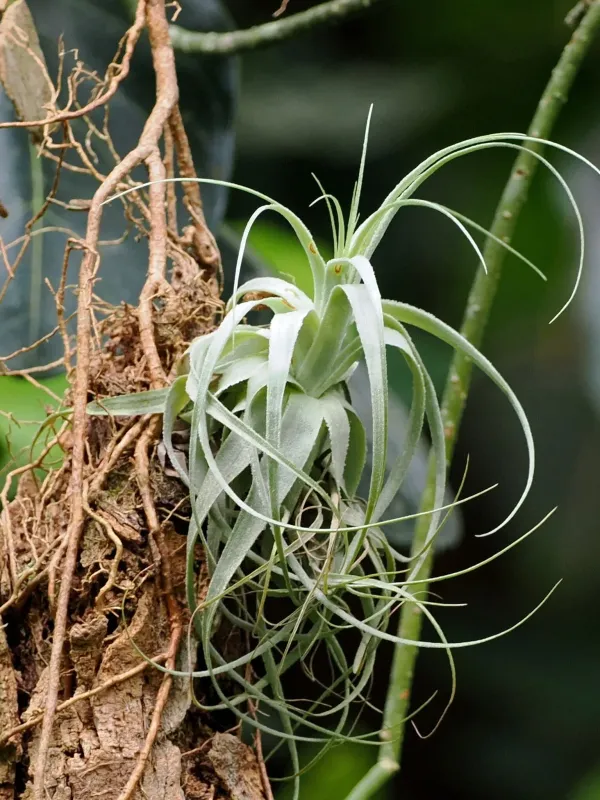
Tillandsia gardneri is a fascinating species belonging to the Bromeliaceae family. Native to the tropical regions of Brazil and Venezuela, this atmospheric epiphyte grows on tree branches, thriving in humid, well-ventilated forest canopy conditions.
The plant is characterized by its silver-colored leaves covered in dense trichomes. These specialized structures are essential for the plant's survival, as they absorb moisture and nutrients directly from the air and rain.
Optimal growth requires bright, filtered light. Exposure to direct afternoon sun should be avoided as it can cause dehydration and irreversible leaf damage, especially in indoor environments.
Unlike terrestrial crops, Tillandsia gardneri does not require soil. It must be mounted on driftwood, bark, or other porous supports, allowing for free airflow around the roots, which serve mainly as anchors.
Consistent temperatures between 18°C and 25°C are ideal. High humidity is crucial; if ambient humidity is low, regular misting with distilled or rainwater is necessary to prevent the leaves from drying out.
Main diseases and pests
The most significant threat to this species is crown rot caused by water stagnation within the leaf rosette. If water sits in the center of the plant for too long, especially in cooler conditions, the plant will rot quickly.
Scale insects and mealybugs are the most common pests that infest Tillandsia gardneri. They tend to hide in the tight crevices between the leaves, making them difficult to detect early.
Spider mites are another concern, usually appearing when the environment is consistently too dry. Their presence can be identified by fine webbing and yellowing patches on the foliage.
Mineral buildup from hard tap water can clog the trichomes, preventing the plant from absorbing nutrients, which leads to slow decline and eventually plant death.
- Proper air circulation
- Avoid stagnant water in the rosette
- Use of rain or distilled water