
Tillandsia fuchsii
Tillandsia fuchsii
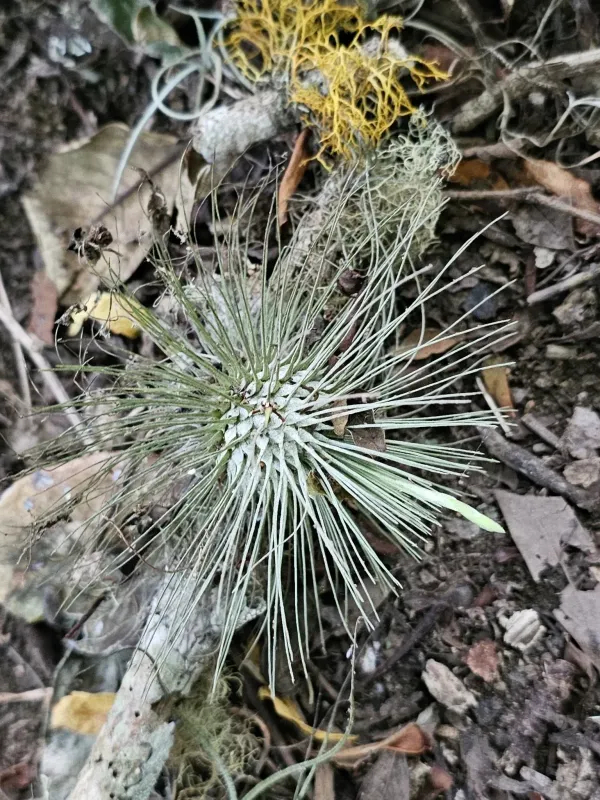
Description
Growing requirements
Tillandsia fuchsii belongs to the Bromeliaceae family and is recognized as an atmospheric epiphyte. Naturally occurring in the tropical forests of Mexico, it typically grows on tree branches, where it secures itself using its roots primarily for structural support rather than nutrient absorption.
The plant is distinguished by its thin, silver-colored leaves covered in dense trichomes. These specialized scales are evolutionary adaptations that allow the plant to absorb moisture, minerals, and nutrients directly from the surrounding air and rainfall, eliminating the need for traditional soil cultivation.
For successful cultivation, Tillandsia fuchsii requires a high relative humidity level, ideally ranging from 60% to 80%, combined with excellent air circulation. The preferred temperature range is between 20°C and 25°C, ensuring that the plant remains active without experiencing thermal stress.
Cultivation practices involve regular misting with distilled or rainwater to ensure the foliage remains hydrated. During the active growing season, diluted liquid fertilizers specifically formulated for bromeliads should be applied sparingly to the leaves to supplement the plant's nutritional intake.
In terms of agricultural and horticultural use, this species is highly valued in the decorative indoor plant market. Its compact, needle-like foliage makes it an ideal candidate for vertical gardens, living frames, and artistic floral arrangements where aesthetic appeal is the primary objective.
Main diseases and pests
The most significant threat to the health of Tillandsia fuchsii is rot resulting from stagnant moisture within the leaf rosette. To mitigate this risk, it is essential to ensure that the plant dries completely within a few hours following any watering procedure.
Common pests that affect this species include mealybugs and scale insects. These organisms thrive in sheltered areas of the plant, extracting sap and causing leaf distortion or stunted growth if the infestation is left untreated.
Management of pest populations requires diligent inspection and the application of safe, non-toxic horticultural sprays. For minor infestations, manual removal using a soft brush or a cotton swab dipped in isopropyl alcohol can be highly effective without damaging the delicate trichome structure.
Fungal infections can occur if the plant is kept in an environment with poor air movement and high humidity for extended periods. Symptoms include dark spots or mushy tissue, which necessitates immediate isolation and improvement of the surrounding microclimate.
Hard water usage is a critical oversight in care, as mineral buildup can clog the trichomes, preventing the plant from functioning correctly. Consistent use of soft water prevents "suffocation" of the plant's leaf surface and ensures long-term viability in an indoor environment.