
Tillandsia flexuosa
Tillandsia flexuosa
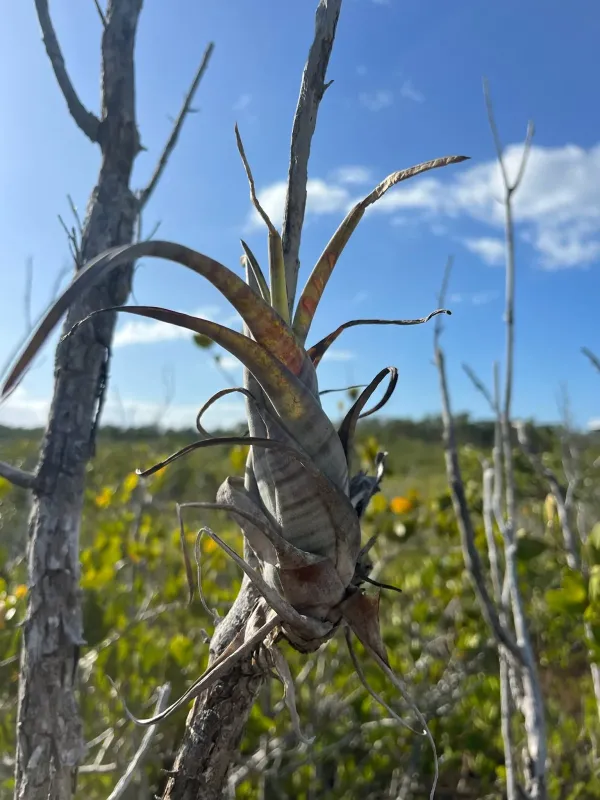
Description
Growing requirements
Tillandsia flexuosa belongs to the Bromeliaceae family and is recognized as a hardy epiphytic species. In its native habitat, it thrives on trees and rocky outcrops across the Caribbean, Florida, and parts of Central and South America.
This species is characterized by its stiff, recurved leaves arranged in a bulbous rosette. It serves as an ornamental crop in floriculture due to its unique growth habit and its long-lasting, attractive inflorescence.
Agronomic requirements emphasize the importance of bright, indirect sunlight. While the plant can tolerate some direct sun, high temperatures during peak hours necessitate light shading to prevent foliar heat stress and dehydration.
Air circulation is the most critical factor for healthy development. In a greenhouse environment, constant airflow prevents moisture accumulation in the leaf axils, which is essential for mimicking the plant's natural windy habitat.
Watering frequency depends on ambient humidity. Misting or deep soaking with demineralized water is standard practice. The plants must dry out completely between waterings to ensure optimal health and root system stability.
Main diseases and pests
Mealybugs and scale insects represent the most significant biotic threats to this crop. These pests tend to colonize the base of the leaves and the flower stalk, drawing nutrients and stunting plant growth.
Fungal pathogens and rot occur primarily due to poor drainage and stagnant moisture. If the core of the rosette stays wet for too long, especially in cooler conditions, the tissue may collapse rapidly.
Spider mites can become a problem in low-humidity environments. Maintaining high relative humidity and regular rinsing of the leaves can effectively suppress mite populations without the need for aggressive pesticides.
Integrated Pest Management (IPM) strategies are recommended for managing these epiphytes. Utilizing systemic insecticidal soaps or horticultural oils can provide control while ensuring the plant's delicate tissues remain undamaged.
Regular monitoring of plant health is necessary for early detection of issues. By maintaining a clean environment and balanced moisture levels, growers can significantly reduce the risk of outbreaks and ensure high-quality plant production.