
Tillandsia espinosae
Tillandsia espinosae
Description
Growing requirements
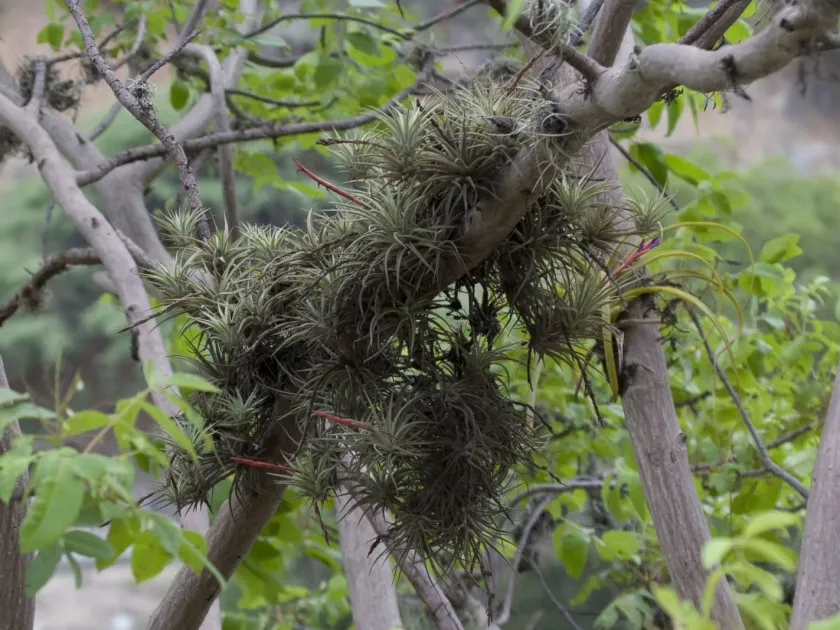
Tillandsia espinosae is a unique epiphytic species belonging to the Bromeliaceae family. It is native to the arid regions of Ecuador, where it naturally anchors itself onto tree trunks and rock faces, relying on atmospheric moisture for its survival.
For successful cultivation, this species requires high humidity levels combined with excellent air circulation. Temperatures should ideally remain between 18 and 25 degrees Celsius, avoiding any exposure to frost or extreme heat, which can be detrimental to the plant.
Unlike terrestrial crops, this plant lacks a functional root system for soil nutrient uptake. Instead, it utilizes specialized scales called trichomes on its leaves to absorb water and nutrients directly from the air, making misting the primary irrigation method.
Lighting is a crucial factor for the health of Tillandsia espinosae. It thrives in bright, filtered light conditions. Direct, intense sunlight can scorch the delicate foliage, while insufficient light leads to etiolation and a decline in the plant's structural integrity.
The substrate should be purely decorative or structural, such as driftwood, cork bark, or mounting boards. It is essential to ensure that the base of the plant remains dry to prevent rot, as the species is highly susceptible to water stagnation in its center.
Main diseases and pests
The most significant threat to the health of Tillandsia espinosae is crown rot, triggered by overwatering or poor ventilation. If water remains trapped in the center of the rosette for too long, opportunistic pathogens quickly colonize the tissue.
Scale insects are a persistent pest that frequently hides in the crevices of the rosette. By sucking the plant's sap, these insects cause stunted growth and yellowing of the leaves, eventually weakening the entire specimen if left untreated.
Mealybugs also pose a threat, often clustering in protected areas near the base of the leaves. Their feeding habits create entry points for secondary infections, necessitating careful monitoring and prompt mechanical or chemical intervention.
Spider mites may appear in environments where air humidity is consistently low for extended periods. These pests cause the leaves to lose their vibrant color and texture, making the plant look dehydrated and unhealthy despite frequent misting.
Prevention is the most effective strategy against these threats. Maintaining a consistent airflow, using high-quality distilled or rainwater, and performing routine visual inspections will significantly increase the lifespan and ornamental value of the plant.