
Tillandsia erici
Tillandsia erici
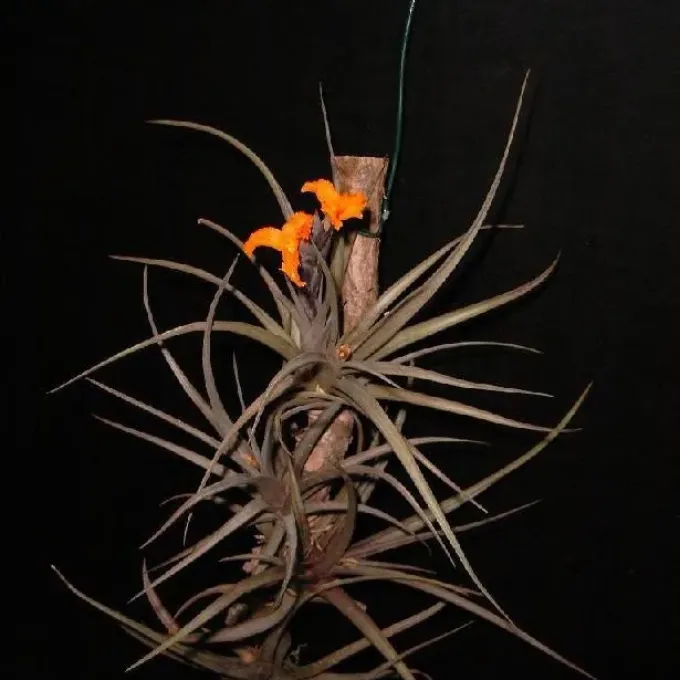
Description
Growing requirements
Tillandsia erici is a fascinating species of epiphytic plant belonging to the Bromeliaceae family. Originating from the tropical regions of South America, this plant is naturally adapted to grow on tree branches, where it thrives in high-humidity environments without relying on soil for nutrients.
Botanically, the plant features a dense rosette of stiff, tapered leaves designed to efficiently capture moisture and airborne nutrients. Its most notable physiological adaptation is the presence of trichomes, microscopic scales on the leaf surface that facilitate water absorption directly from the humid air.
In a controlled cultivation setting, Tillandsia erici requires a climate with consistent temperatures ranging from +18°C to +25°C. High humidity levels, often exceeding 60-70%, are crucial for sustaining the plant's metabolic functions, as the roots serve primarily as anchors rather than organs for moisture uptake.
Light management is a critical aspect of its agrotechnology. The plant performs best under bright, indirect sunlight. Harsh, direct afternoon sun can lead to leaf scorching, whereas insufficient lighting results in weak growth and the loss of the plant's natural, vibrant appearance.
Cultural maintenance involves regular misting with purified water or brief submersion to ensure hydration. Because the plant is sensitive to water quality, it is essential to avoid hard water or water containing heavy minerals, which can clog the leaf trichomes and hinder nutrient intake.
Main diseases and pests
Disease management is largely focused on moisture control. The most significant threat is stem and root rot, which typically occurs when the plant is kept in conditions with poor airflow or when water is allowed to stagnate in the center of the leaf rosette for extended periods.
Pest pressures primarily include scale insects and mealybugs. These sap-sucking pests can weaken the plant by extracting essential fluids, leaving behind sticky residues that can subsequently attract sooty mold, further compromising the plant's health and aesthetic value.
To combat infestations, growers should utilize mechanical cleaning or targeted insecticidal treatments. It is recommended to perform routine inspections of the plant's foliage, particularly the base of the rosette, where pests often hide and establish their initial colonies.
Preventative strategies are centered on environmental hygiene. Ensuring a constant flow of fresh air around the foliage prevents the buildup of excess humidity and discourages the proliferation of fungal pathogens that target tropical epiphytes.
Overall, maintaining the plant's health requires a balanced approach to hydration and ventilation. By mimicking its natural tropical habitat, growers can minimize the need for chemical interventions and ensure the long-term vitality of the Tillandsia erici culture.