
Tillandsia edithae
Tillandsia edithae
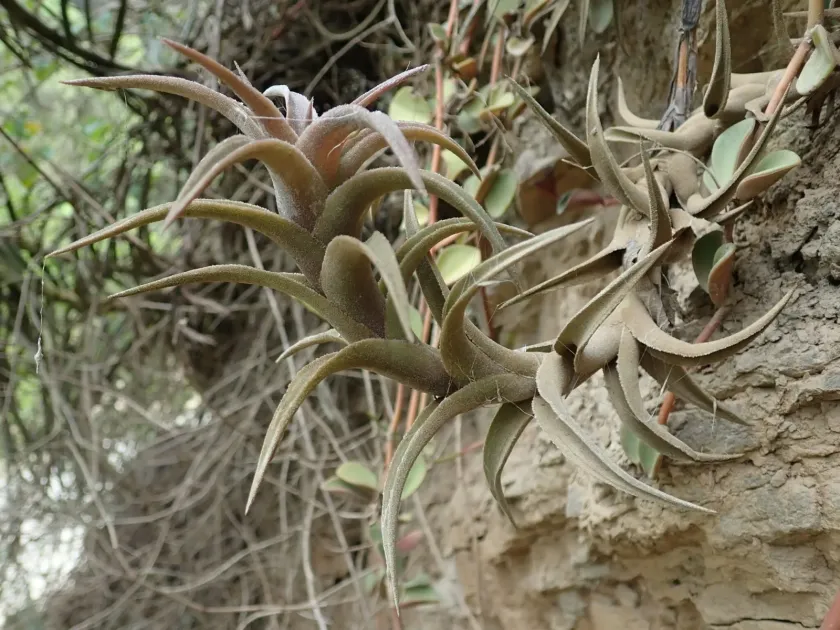
Description
Growing requirements
Tillandsia edithae is a fascinating species of air plant belonging to the Bromeliaceae family. Originating from the high-altitude rocky landscapes of Bolivia, this plant has evolved to thrive in environments with significant air exposure and minimal soil contact.
The plant features compact rosettes composed of silvery-grey leaves. These leaves are densely covered in trichomes—specialized scales that act as an external absorption system, capturing water vapor and nutrients from the atmosphere to sustain the plant.
When cultivating this species, high levels of bright, indirect light are essential. Proper illumination encourages the development of the characteristic pink bracts and ensures the plant maintains its compact, architectural growth habit rather than becoming leggy.
Environmental conditions should mimic its native habitat, specifically regarding airflow. Constant air movement is crucial to ensure that the plant dries thoroughly between waterings, preventing trapped moisture from causing systemic issues in the core.
As an epiphyte, it does not require a traditional potting mix. It is typically mounted on cork, driftwood, or secured to decorative wire structures. This mounting method facilitates the necessary gas exchange and prevents the base from rotting due to moisture accumulation.
Main diseases and pests
The most significant threat to Tillandsia edithae is rot, usually triggered by poor drying conditions after irrigation. Excessive water retention in the leaf axils promotes the growth of pathogens that can cause the plant to collapse rapidly.
Mealybugs represent a major pest risk for this species. These insects often nest deep within the dense rosettes, feeding on sap and excreting honeydew, which attracts secondary fungal infections. Regular inspection of the plant's center is vital.
Spider mites can also become a problem, particularly in environments with low humidity and stagnant air. These pests damage the trichomes, effectively choking the plant by preventing it from absorbing moisture and nutrients from the air.
Chemical control must be applied with great care. Many standard pesticides can damage the delicate trichome structure, which is the plant's lifeline. It is recommended to use systemic or natural insecticidal soaps at highly diluted concentrations.
Water quality is a critical factor in maintaining plant health. Using softened or heavily chlorinated water can cause mineral buildup on the leaves, severely hindering the plant's ability to thrive and increasing its susceptibility to physiological stress.