
Tillandsia circinnata
Tillandsia circinnata
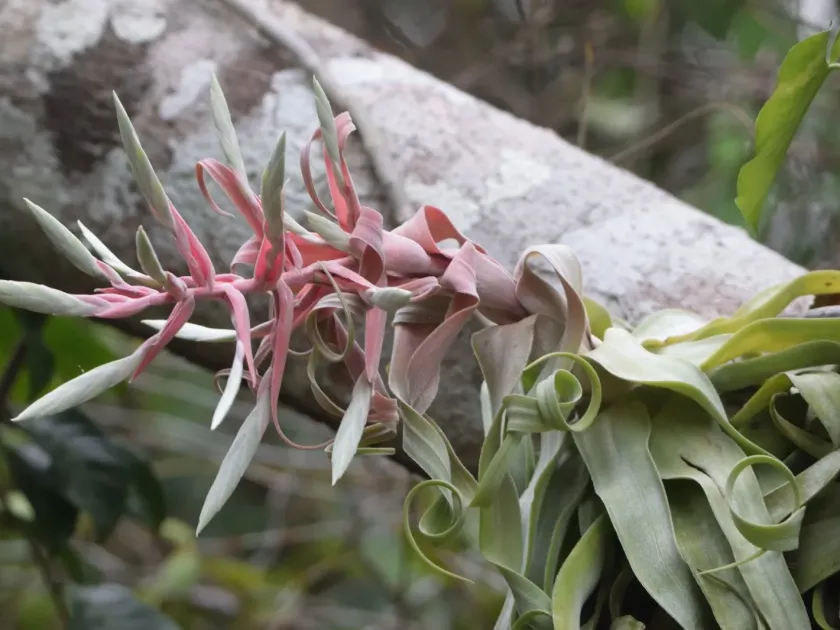
Description
Growing requirements
Tillandsia circinnata is a species of flowering plant within the Bromeliaceae family. It is recognized as an atmospheric epiphyte, characterized by its ability to grow on host plants without being parasitic, utilizing its roots strictly as a holdfast mechanism.
Native to Florida, Mexico, and the Caribbean, this plant thrives in subtropical environments. It has evolved to survive in canopy ecosystems where moisture availability is intermittent, relying on high humidity and rainfall.
The defining botanical feature is the presence of dense trichomes covering the leaves. These structures act as specialized cellular sponges, capturing moisture and mineral nutrients directly from the surrounding atmosphere, which allows the plant to flourish without a traditional soil substrate.
Optimal cultivation requires bright, filtered light. Exposure to intense, direct afternoon sun can damage the foliage, while insufficient light levels will result in weak growth and the loss of the plant's characteristic tight, spiral leaf formation.
Air circulation is the most critical factor for long-term health. The plant must dry out completely between waterings to prevent the development of core rot. It is typically mounted on driftwood or bark to mimic its natural epiphytic habitat.
Main diseases and pests
The primary pests affecting Tillandsia circinnata include mealybugs and spider mites. These insects tend to hide between the tightly curled leaves, making them difficult to detect until the plant shows visible signs of stress, such as yellowing or stunted growth.
Rot caused by fungal infections is the most significant threat to the survival of this species. This condition is almost exclusively the result of water pooling in the leaf axils for extended periods, especially in environments lacking adequate airflow.
- Regular inspection of the leaf base for signs of decay.
- Gentle cleaning of the foliage with a soft brush to remove pests.
- Ensuring complete drying within a few hours after irrigation.
Mineral buildup is a common non-infectious issue. Using water with high salt content will clog the trichomes, effectively choking the plant by preventing its ability to absorb essential moisture and nutrients from the air.
Effective management involves preventive care rather than curative action. Keeping the plant in a well-ventilated area and using purified or rainwater are the best ways to avoid the majority of disease-related complications and maintain vigor.